Category: Uncategorized

  • Travis County Probate Real Estate: A Texas Broker’s Complete Guide

    Travis County is where most of the probate real estate in the Austin metro lives. When a parent dies and leaves a house in Austin, Round Rock, Lakeway, or anywhere else inside the county lines, the executor or administrator is the one who has to sell it. This guide walks through the actual probate process in Travis County, what selling an inherited house looks like here, and the specific things Austin executors should know that ordinary home sellers do not.

    I am Jeremy Kritt, a Texas Real Estate Broker (TREC license number 692961) and the owner of Kritt Real Estate LLC (firm license number 9011672). Texas Probate Real Estate is the probate-specialty brand of that brokerage. I work probate sales across Austin, San Antonio, and the Central Texas counties between them every week. None of what follows is legal advice. It is the practical reality I see on every transaction.

    Travis County Probate Court, the basics

    Travis County has two statutory probate courts. Both sit in the Heman Marion Sweatt Travis County Courthouse at 1000 Guadalupe Street in downtown Austin. The probate clerk and the probate courtrooms are in the same building.

    Travis County Probate Court Number 1 is presided over by Judge Guy Herman, who has held the seat since 1985 and is one of the most experienced probate judges in Texas. Travis County Probate Court Number 2 is presided over by Judge Nick Chu. The two courts share jurisdiction and split caseload, so you do not pick which one your case lands in. It is assigned at filing.

    The Travis County Probate Clerk handles filings. Standard probate filing fees in Travis County typically run between approximately three hundred and five hundred dollars, depending on whether you are filing a will, an application for administration, or another instrument. The Clerk publishes a current fee schedule and accepts filings during normal business hours Monday through Friday.

    Two paths through Travis County probate

    Texas uses two main administration structures, and Travis County is no exception. Which structure your case falls into is the single biggest factor in how long the process will take and how much court involvement you will have along the way.

    Independent administration

    This is the typical Texas path. Most well-drafted wills request it explicitly, and Texas law strongly favors it. Under an independent administration, the personal representative (the executor named in the will, or the administrator appointed by the court) has authority to handle estate matters without going back to the court for permission on each step. That includes listing and selling the real estate. After Letters Testamentary or Letters of Administration are issued, the executor or administrator can sign listing agreements, accept offers, and close on a sale without separate court approval. Independent administrations in Travis County typically wrap up in approximately six months, depending on the estate’s complexity.

    Dependent administration

    This is the court-supervised version. The court has to approve significant decisions, including the sale of real estate. This path is required in some cases, including contested estates or estates where the will did not request independent administration and the heirs do not all consent. Dependent administrations in Travis County typically take nine to twelve months. A real estate sale under dependent administration involves an application to sell, court approval, and an order approving the sale before closing. It is a more deliberate process. The sale timeline has to stay aligned with the court process, which the attorney handles at each step.

    Most Travis County probate property sales proceed under independent administration. If your attorney is recommending dependent administration, it usually means there is a specific reason. A contest, a minor heir, a specific will provision, or heirs who cannot agree. None of those are reasons to panic. They just mean the process has more guardrails.

    Letters Testamentary and the 90-day clock

    Letters Testamentary (or Letters of Administration if there is no will) are the document that gives the executor or administrator legal authority to act on behalf of the estate. Nothing about the real estate can really move until Letters are issued. Banks, title companies, and buyers all need to see them.

    In Travis County, Letters are typically issued within two to four weeks of the initial probate filing, assuming there are no contests and the will is admitted to probate without issue. Once Letters are in hand, the personal representative can sign the listing agreement on behalf of the estate, the brokerage can begin marketing the property, offers can be accepted and counter-offered, and title companies will treat the Letters as proof of authority during closing.

    After Letters are issued, the statutory clock starts on a separate deadline: the 90-day inventory. The personal representative has 90 days to file an inventory, appraisement, and list of claims with the court. The inventory has to list everything the estate owns and its fair market value as of the date of death. This is one of the most-missed deadlines in Texas probate, and it has consequences. If you are selling the house and the inventory has not been filed, your attorney needs to be on it.

    Selling a probate house in Travis County, step by step

    The selling process for a probate property in Travis County looks similar to a regular Austin home sale on the surface, but there are practical differences at each stage.

    Listing

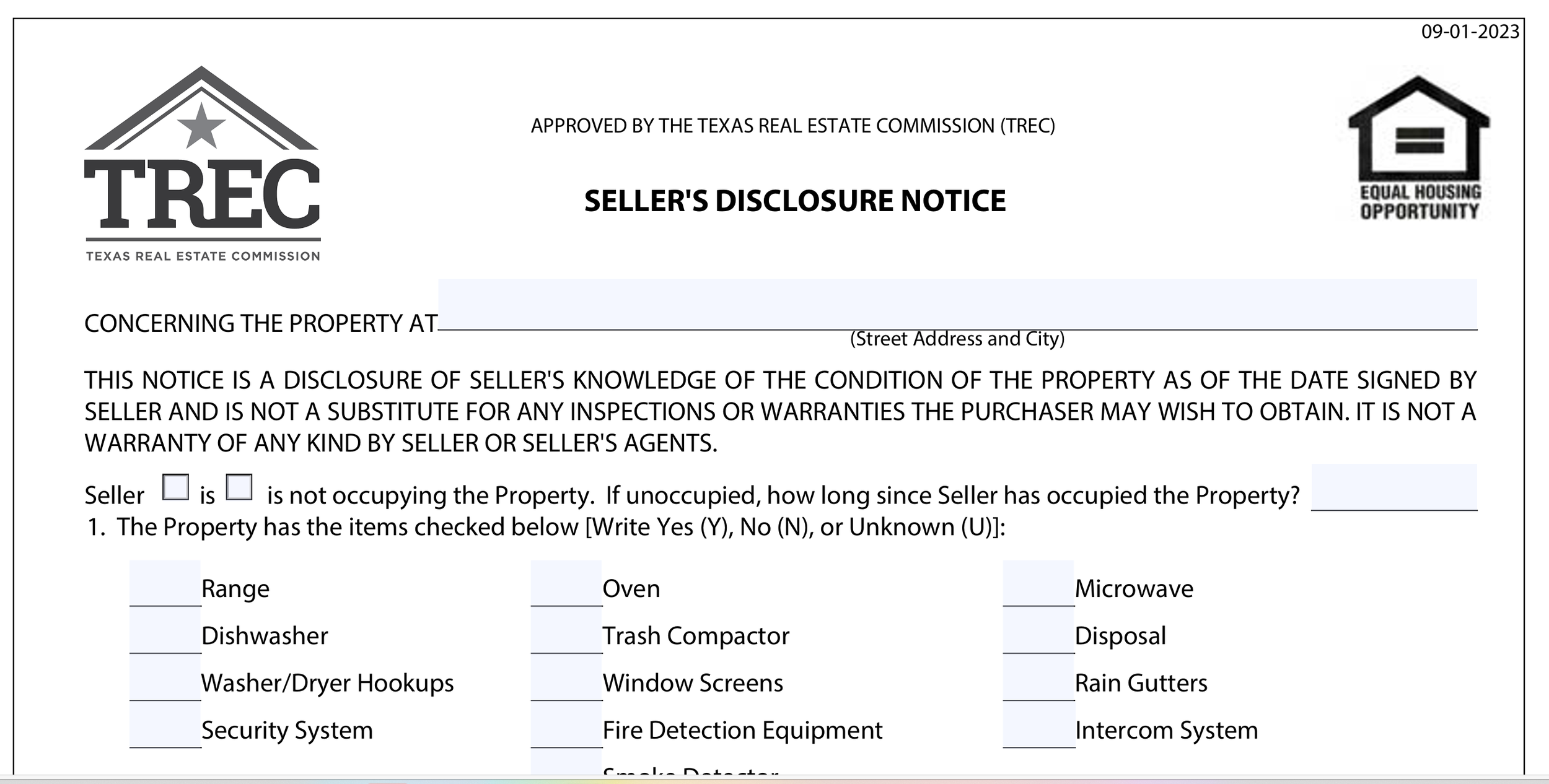
    The personal representative signs the listing agreement on behalf of the estate, not personally. Under Texas Property Code §5.008(e), a fiduciary administering a decedent’s estate is exempt from furnishing the standard Seller’s Disclosure Notice that owner-occupants are required to provide. The estate sells without that form, which is a meaningful procedural difference for executors who never lived in the property. The buyer is informed via the contract that the sale is by a fiduciary, and the property is typically sold as-is. Federal lead-based paint disclosure still applies for homes built before 1978, and HOA disclosures still apply where the property is in an HOA. The listing should be priced based on the property’s actual condition, including any deferred maintenance, vacant-home issues, and personal property that needs to be cleared out before showings.

    Marketing

    Probate properties in Austin attract a specific kind of buyer interest the moment the case is filed. Cash investors, wholesalers, and we-buy-houses operators monitor Travis County probate filings and start reaching out to the executor within days. They send letters, postcards, text messages, and door knockers. Their offers are routinely twenty to forty percent below open-market value. The right move is almost always to ignore them and put the property on the open market through a broker. A broker-marketed Austin probate property in reasonable condition will sell well above what the wholesalers offer, and the difference goes to the heirs.

    Offers and negotiation

    The personal representative reviews and accepts offers. In a Travis County independent administration, this is a direct decision the personal representative makes. In a dependent administration, the offer has to be presented to the court for approval before closing, and a hearing is held to confirm the sale terms.

    Inspections

    Buyers usually want an inspection, and inspections on probate properties frequently turn up deferred maintenance items. The personal representative is not personally on the hook for repairs (the estate is), but the negotiation around what gets fixed versus what gets credited needs to factor in what the estate can actually afford to do. Sometimes the right answer is to credit the buyer at closing rather than to coordinate repairs from out of state.

    Title

    The title company will need copies of the will, the order admitting the will to probate, the Letters Testamentary, and any necessary tax certificates. A title officer who has handled probate before will know what they need without prompting. One who has not will ask for things they do not really need and miss things they actually do. Title selection matters more on probate sales than on ordinary sales.

    Closing

    The personal representative signs all closing documents on behalf of the estate. The proceeds go to the estate’s account, not to the personal representative personally, and from there they are distributed to the heirs per the will (or per Texas intestacy rules if there is no will). Most Travis County probate property sales, once the property is listed and there are no major complications, close in 30 to 60 days. The court timeline (getting Letters issued) is usually the longer constraint, not the sale itself.

    Austin neighborhoods where I work probate sales

    Travis County covers the City of Austin plus a number of surrounding suburbs. Common neighborhoods where I handle probate transactions include:

    Central Austin and historic neighborhoods: Tarrytown, Westlake, Hyde Park, Allandale, Crestview, Brentwood, Travis Heights, Bouldin Creek, East Austin, Mueller, Old West Austin, Pemberton Heights, Zilker, Barton Hills, Rosedale, Hancock, North Loop, and Cherrywood.

    Newer Austin neighborhoods and edge-of-city subdivisions: Circle C, Southwest Austin, South Lamar, Highland, Riverside, and Steiner Ranch.

    Travis County suburbs outside Austin city limits: Lakeway, Bee Cave, West Lake Hills, Rollingwood, Sunset Valley, Manor, Lago Vista, and Jonestown.

    Travis County also borders Williamson County (Round Rock, Cedar Park, Leander, Georgetown, Pflugerville) to the north, and Hays County (San Marcos, Buda, Kyle, Dripping Springs) to the south. I work probate sales across all of those counties as well, so if the property is on the county line, that is not an obstacle.

    The neighborhood matters because the buyer pool varies. A Tarrytown probate sale has a different audience than a Riverside probate sale, and the marketing approach reflects that.

    Common Travis County probate scenarios I see

    The executor lives in another state

    This is one of the most common scenarios I see in Travis County. The decedent lived in Austin, the adult child who is named executor lives in Phoenix or Chicago or somewhere not driving distance, and the property is sitting empty needing decisions. The whole transaction can be handled remotely. The executor flies in once for closing or signs via a mobile notary in their home state, and the broker manages everything on the ground. Remote-executor work is a specialty of the firm. I run that workflow on a regular basis.

    Heirs do not agree on what to do with the house

    Two or three siblings inherit the property and they want different things. One wants to sell quickly. Another wants to rent it out. Another wants to keep it as a family asset. In Texas, under independent administration, the personal representative has authority to make the call and sell. When the heirs cannot agree and they end up as co-owners after the estate closes, the situation can move into a partition action. This is one of the most emotionally loaded scenarios in probate, and it benefits enormously from the personal representative working with a broker who has navigated it before.

    The property has significant deferred maintenance

    Common in Austin, where many older neighborhoods have houses that have been lived in by the decedent for thirty or forty years without major updates. The decision is whether to invest in pre-listing improvements, sell as-is to a retail buyer who will discount for condition, or sell to an investor. The right answer depends on the estate’s cash position, the heirs’ goals, and the specific market segment of the property. We walk through the math on the first call.

    The property has tenants

    Texas has specific rules about tenant rights during a sale, and Austin tenants in particular tend to know their rights. A tenant-occupied probate property is sellable, but it requires coordination on showings, lease assignment, and sometimes lease termination. The lease survives the death of the landlord; the heirs (and ultimately the buyer) inherit it.

    The property has liens or back property taxes

    Common when the decedent was managing finances poorly in the last years of life. These get resolved through the sale, out of the proceeds, but they have to be flagged early so the title company is prepared and the heirs understand how the math will work at closing.

    Why work with a probate-focused broker

    Most Austin real estate agents have done one or two probate sales in their career. They are competent at general real estate but they treat probate as another kind of transaction. The reality is that probate has its own pace, its own paperwork, its own emotional dynamics, and its own buyer pool. A broker who handles these weekly knows the title officers, knows the probate attorneys, knows what Judge Herman or Judge Chu will want to see if a question comes up, and knows the difference between an investor lowball and a real offer.

    I run an owner-operator brokerage. I am the owner of Kritt Real Estate LLC, the broker of record, and the broker who is on every probate transaction personally. There is no team agent. The person who picks up the phone on your first call is the person who lists the property, negotiates the offers, coordinates with the title company, and signs at closing.

    I am a Texas Real Estate Broker (license number 692961), which puts me in the top approximately ten percent of Texas real estate license holders. The broker license requires four or more years of experience, hundreds of additional education hours beyond the agent license, and a separate examination. For an executor or attorney looking at who to trust with the largest single asset in an estate, the broker credential matters.

    I work alongside the probate attorney managing the case, not in place of one. The attorney handles the legal proceeding. I handle the real estate. The coordination is what matters because court timelines and sale timelines have to stay in sync.

    Frequently asked questions about Travis County probate real estate

    How long does probate take in Travis County?

    Independent administration typically wraps up in about six months. Dependent administration takes nine to twelve months. The longest pole is usually the time it takes to get Letters Testamentary issued, which is typically two to four weeks after the initial filing. Once Letters are in hand, the sale itself typically closes in 30 to 60 days.

    Can I sell a probate house in Austin before probate is finished?

    Yes, in independent administration. Once Letters Testamentary are issued, the personal representative has authority to list and sell. The estate does not have to be fully closed for the sale to happen. In dependent administration, the court has to approve the sale.

    Who signs the listing agreement and the closing documents?

    The personal representative (executor or administrator), in their capacity as representative of the estate. Not personally. The title company will need Letters Testamentary or Letters of Administration to confirm authority.

    What is the difference between Travis County Probate Court 1 and Probate Court 2?

    Both are statutory probate courts with the same jurisdiction and procedures. They divide caseload between them. Court 1 is presided over by Judge Guy Herman; Court 2 by Judge Nick Chu. Your case is assigned to one or the other when you file. You do not pick.

    I am the executor and I live out of state. Can I sell the property without coming to Austin?

    Yes. The transaction can be managed remotely. I work remote-executor cases regularly. You will need to either fly in once for closing or sign via a mobile notary in your home state. Texas title companies are accustomed to this and the workflow is well-understood.

    Should I take a cash offer from an investor who reached out after the probate was filed?

    Almost never, without checking the open market first. Cash offers on probate properties typically come in twenty to forty percent below open-market value. Investors are betting the executor is overwhelmed and wants a fast resolution. A broker-marketed Austin probate property in reasonable condition will sell well above the wholesale offer in most cases. The difference goes to the heirs.

    What if the property is in bad condition?

    It is still sellable. The decision is whether to invest in pre-listing repairs, sell as-is to a retail buyer (who will discount for condition), or sell to an investor at a deeper discount. Each path has different math. We work through it on the first call.

    What does the probate attorney do versus what does the real estate broker do?

    The probate attorney handles the court proceeding: filing the will, getting Letters Testamentary issued, the inventory, dealing with creditors, the final estate accounting. The broker handles the real estate sale: listing, marketing, offers, inspections, title, closing. The two roles coordinate but they do not overlap.

    What are the filing fees in Travis County probate?

    Standard probate filing fees in Travis County typically run between approximately $300 and $500, depending on whether you are filing a will, an application for administration, or another instrument. The Probate Clerk publishes a current fee schedule.

    Do I have to use a probate attorney to sell the house?

    You do not have to, but in practice you do. The personal representative needs Letters Testamentary to sell, and getting Letters issued requires a probate filing, which functionally requires an attorney. The broker handles the real estate side; the attorney handles the probate side. They are separate roles.

    Schedule a consultation

    If you are working through a Travis County probate sale and want to talk through your specific situation, schedule a free consultation. We can cover where the case is, what timeline you are looking at, the property’s condition, and what makes sense for the heirs. Phone: (512) 686-3076. Or book online: texasprobaterealestate.com/consultation/.

  • How Long Does Probate Take in Texas Without a Will?

    How Long Does Probate Take in Texas Without a Will?

    When someone passes away without a valid will in Texas, the probate process becomes more complicated and significantly longer. Most people ask, ‘how long does probate take in Texas without a will?’ The honest answer is it typically takes eight months to two years, depending on whether the family agrees on the heirs and estate distribution. As a Certified Probate Expert helping people with selling real estate in probate, I can tell you that dying without a will in Texas often adds substantial time and expense to an already difficult process.

    The absence of a will means the court must determine who the heirs are. This process, called heirship proceedings, is the major time consumer. Instead of a single document stating who inherits what, the court must examine the deceased person’s family tree and apply Texas intestacy laws.

    Understanding Intestate Succession in Texas

    Texas intestacy laws are actually quite clear and fair, but they require proof. When someone dies without a will, Texas law specifies the order of inheritance. A surviving spouse typically receives a portion, children receive portions, and if there are no children, parents or siblings inherit.

    However, how long does probate take in Texas without a will? The court cannot just take your word for who the family members are. The court must have affidavits and evidence proving relationships. Birth certificates, marriage certificates, death certificates of prior family members, and sometimes testimony from family members become necessary.

    This documentation phase alone can take two to four months. If family members live in different states or if original documents are hard to locate, it takes even longer. I have had cases where tracking down a birth certificate from a relative born in another country added months to the process.

    The Heirship Determination Process

    The heirship determination is the critical difference between probate with a will and without one. This is what extends how long probate takes in Texas without a will significantly.

    The process begins when an interested party, usually a family member, files an application for determination of heirship with the probate court. That application needs to lay out the decedent’s full family history, including marital status, children, and all other surviving relatives the applicant is aware of.

    After the application is filed, the court brings in an attorney ad litem. This is not the Attorney General. It is a lawyer the court appoints specifically to look out for any heirs who may exist but have not been identified or located. This attorney conducts their own independent review of the family history and verifies that the application is accurate. The estate typically covers the cost of this attorney.

    From there, every known heir who is 12 or older must receive formal notice of the proceeding. For heirs younger than 12, notice goes to their parent, guardian, or managing conservator. On top of that, notice has to be posted at the courthouse, and in some situations additional publication or certified mail is required. All of these notice steps create built in waiting periods before the court will schedule a hearing.

    The court also requires testimony from two witnesses who have no stake in the estate. These witnesses need to be people who knew the decedent and can speak to the family relationships and marital history from their own personal knowledge. In practice, finding the right witnesses can be one of the more frustrating parts of the process, especially when the decedent was elderly or did not have many close connections in the community.

    Once all of these requirements are satisfied, the court holds a hearing. Family members have the right to appear and challenge who should be recognized as an heir. If everything lines up and the evidence is clear, the judge enters a formal judgment that establishes exactly who the legal heirs are and what share of the estate each one receives. That judgment becomes part of the permanent court record. If there are disputes, the process takes considerably longer.

    Dependent Administration Is Typically Required

    Another major difference: probate without a will in Texas often involves dependent administration by default. Without a will naming an independent executor, the estate defaults to dependent administration unless all heirs unanimously agree to an independent administration. If any heir is a minor, is incapacitated, or simply does not agree, the court oversees major decisions.

    With dependent administration, every significant action requires court approval. Selling property, spending estate money, or distributing assets all require petitions to the court. This judicial oversight adds weeks or months to the process.

    The personal representative must also provide an inventory and appraisal of all estate assets, file bond in most cases, and prepare detailed accountings for the court. These requirements are protective for heirs but time consuming.

    The critical fix is that the original flatly says the personal representative “cannot claim independent administration authority” without a will, which is wrong. They can, but only if every heir agrees.

    Common Delays in Intestate Probate

    One of the biggest delays I see in Texas intestate probate happens when family members disagree about who qualifies as an heir. For example, if a deceased person had an ex spouse or a child from a prior relationship, questions about inheritance rights can create disputes that bring the entire process to a halt.

    Even more complex are situations involving unmarried partners, contested paternity, or adult stepchildren. The court must hear evidence and make findings about family relationships before assets can be distributed. These contested heirship cases can stretch probate from one year to three years or more, depending on how many parties are involved and how willing they are to cooperate.

    How long does probate take in Texas without a will when there is family conflict? Potentially much longer than you would expect. I recommend settling disputes early and getting agreement from all family members on the heir list if possible. Every week spent arguing is a week the estate sits in limbo, and legal costs continue to climb for everyone involved.

    Here is something important that many people get wrong. You may have heard about the four year deadline to file probate after someone’s death in Texas. That rule applies specifically to probating a will. If someone dies without a will, there is no strict four year statute of limitations on filing an heirship proceeding. Texas courts can hear heirship determinations at any time after the decedent’s death.

    However, that does not mean you should wait. The practical reality is that delays create serious complications. The longer you wait, the harder it becomes to locate heirs, gather documents, preserve evidence of family relationships, and resolve tax and property issues. Witnesses who can testify about family history may become unavailable. Property values can change. Creditor situations can become more tangled.

    Most Texas courts want to see intestate probate resolved within one to two years. Filing years after the death and expecting a smooth process is unrealistic. The sooner you file, the sooner you get closure, and the less it costs everyone involved.

    Property and Real Estate Complications

    If the deceased owned real estate, probate without a will in Texas takes even longer. Texas intestacy laws pass property according to the statutory order, but that property usually cannot transfer without probate court involvement. In a dependent administration, the personal representative needs court authorization to sell real estate, the court must approve the terms of sale, the sale must close, and then distribution happens. This can add three to six months or more if the property needs to be marketed and sold. However, if all heirs agree to an independent administration, the administrator can sell property without court approval for each transaction, which significantly shortens the timeline. Property with a transfer-on-death deed or right of survivorship bypasses probate entirely. But most inherited real estate without these instruments in place requires full probate court involvement, which slows the process considerably.”

    Creditor Claims and Debts

    Even without a will, Texas requires notice to creditors. The executor or administrator must publish notice to creditors in a local newspaper within 30 days of appointment, and secured creditors must be notified directly by certified mail within 60 days. The personal representative may also give unsecured creditors a permissive notice requiring them to present claims within four months. These requirements apply in any probate, with or without a will

    “Estate debts must be paid from estate assets before any distribution to heirs. The personal representative is responsible for reviewing and verifying all creditor claims for accuracy. If there are significant debts, disputed claims, or questions about the estate’s solvency, this phase can extend the probate timeline considerably. In cases where the estate may be insolvent, the personal representative should withhold distribution until debt payment priorities are resolved.

    Tax Returns and Final Accounting

    How long probate takes in Texas without a will also depends on tax preparation. The personal representative must file a final individual income tax return (Form 1040) for the deceased. If the estate generates income during administration, a separate estate income tax return (Form 1041) may also be required. For estates exceeding the federal estate tax exemption threshold, a federal estate tax return must be filed as well — though Texas imposes no state estate or inheritance tax. These tax filings often can’t be completed until assets are gathered and appraised. And if the IRS has questions or requires additional review, you’re looking at further delay before the personal representative can be discharged

    Why You Should Act Quickly

    If you’re facing intestate probate in Texas, the best strategy is to move fast and cooperate. Delays compound. Getting a probate attorney involved immediately, gathering documents early, and reaching family agreement on heirs prevents months of additional waiting.

    I’ve seen cases where family members delayed cooperation or failed to provide necessary documents, adding an entire year to probate. That delays distribution to everyone and increases legal costs.

    Your Realistic Timeline

    So, how long does probate take in Texas without a will? A typical non-disputed intestate case is twelve to eighteen months. Cases with family agreement on heirs might resolve in eight to twelve months. Contested heirship cases can stretch two years or more.

    The variables are family cooperation, the complexity of family relationships, whether property must be sold, and whether creditor disputes arise. Every case is different, but you should plan on a substantial time commitment.

    If you’re dealing with intestate probate or property issues in a probate case, reach out. I specialize in helping executors and heirs navigate these situations. Call or text me at 512.686.3076, or book a free, no-obligation consultation at texasprobaterealestate.com/contact.

    About the Author

    Jeremy Kritt is a licensed Texas real estate broker and Certified Probate Expert specializing in probate real estate across Travis, Williamson, Hays, Bell, Bastrop, Comal, and Bexar Counties. With nearly a decade of experience helping executors and personal representatives sell inherited properties, Jeremy has developed the As-Is Market Strategy that consistently nets estates $40,000 to $80,000 more than off-market cash offers, without requiring any property repairs. Call or text 512.686.3076 or book a consultation at texasprobaterealestate.com/contact.

    This article is for educational purposes and should not be considered legal or tax advice. Consult with a qualified attorney or CPA for guidance specific to your situation.

  • What Is a Probate Realtor? Broker, Agent, and Realtor Explained

    What Is a Probate Realtor? Broker, Agent, and Realtor Explained

    If you’re navigating the sale of an inherited property, you’ve probably seen the terms broker, sales agent, and realtor used interchangeably. They’re not the same thing. Understanding the difference matters, especially when you’re looking for a probate realtor who can handle the complexity of an estate sale. I’m Jeremy Kritt, a licensed Texas real estate broker and Certified Probate Expert, and I want to break this down clearly so you can make the right hiring decision for your family.

    Sales Agent: The Entry-Level License

    A real estate sales agent holds the basic level of licensing in Texas. They’ve completed their required coursework, passed the state exam, and are legally authorized to help people buy and sell property. However, a sales agent cannot work independently. They must operate under a licensed broker’s supervision.

    Think of it this way: a sales agent is like an associate attorney at a law firm. They’re qualified professionals, but they work under someone else’s license and oversight. When you hire a sales agent, your transaction ultimately flows through their sponsoring broker. The agent handles the day-to-day work, but the broker carries the legal responsibility.

    Broker: The Higher Credential

    A real estate broker holds the highest level of real estate licensing in Texas. To earn a broker’s license, a professional must accumulate years of experience as an agent, complete additional education, and pass a more rigorous examination. Brokers can operate independently, manage their own firms, and supervise agents.

    When you work with a broker, you’re working directly with the license holder. Brokers maintain trust accounts, handle compliance, oversee escrow, and take ultimate responsibility for transactions. They also have decision-making authority that agents don’t possess, including the ability to negotiate broker-to-broker agreements, set transaction policies, and make exceptions to standard procedures. In complex situations like probate sales, that authority and flexibility can make a real difference.

    Realtor: A Professional Membership

    Here’s where people get confused. “Realtor” isn’t a license level. It’s a professional designation indicating membership in the National Association of Realtors (NAR). Both agents and brokers can be Realtors. The designation means they’ve agreed to follow a specific code of ethics and professional standards beyond what state licensing requires. Not every agent or broker is a Realtor, and not every Realtor is a broker.

    What Makes a “Probate Realtor” Different

    A probate realtor is a real estate professional who specializes in selling property within the probate process. This isn’t just a marketing label. It represents a fundamentally different skill set from regular residential real estate.

    Probate sales often involve court oversight, executor fiduciary duties, legal documentation like Letters Testamentary, and coordination between attorneys, title companies, heirs, and the court system. A regular residential realtor who sells homes in usually doesn’t understand these requirements. A probate realtor lives and breathes this process every day.

    The best probate realtors also hold specialized certifications, like being a Certified Probate Expert, which requires dedicated training in estate property sales, probate law, and working with personal representatives, executors, administrators, and heirs.

    Why I’m Uniquely Qualified as Your Probate Realtor

    I combine every layer of qualification into one professional. I’m a licensed Texas real estate broker, a Realtor, and a Certified Probate Expert with nearly a decade of experience helping executors and personal representatives sell inherited properties across Travis, Williamson, Hays, Bell, Bastrop, Comal, and Bexar Counties. That means I hold the highest real estate credential, adhere to NAR’s strict code of ethics, and operate my own probate-focused firm.

    I spent years building expertise as an agent before pursuing my broker’s license, and that background combined with my specialist certification gives me comprehensive knowledge that most real estate professionals simply don’t have. I developed the As-Is Market Strategy, which consistently nets estates $40,000 to $80,000 more than off-market cash offers, without requiring any property repairs.

    When you hire me, you’re getting broker-level responsibility, probate-specialist knowledge, and a track record of results. You’re not being passed off to a junior agent or someone learning probate on your family’s dime. You’re working directly with the person who holds the license, makes the decisions, and takes responsibility for the outcome.

    If you’re looking for a probate realtor who brings the highest level of expertise to your family’s estate sale, call or text me at 512.686.3076 or visit texasprobaterealestate.com/contact to schedule your free consultation.

  • The Wholesaler Playbook: How Cash Offer Companies Target Probate Executors in Austin

    The Wholesaler Playbook: How Cash Offer Companies Target Probate Executors in Austin

    Within 72 hours of your probate filing becoming public record in Travis, Williamson, Hays, or Bexar County, your phone will start ringing.

    “We’re investors in your area and we’d like to make a cash offer on the estate property…”

    It’s not a coincidence. It’s not even personal. You’ve just become part of a systematic, highly efficient machine designed to acquire inherited properties at 30-40% below market value through off-market transactions.

    Here’s what “off-market” means: These buyers want you to accept their private offer without ever exposing your Austin property to the full market of competing buyers. No MLS listing. No professional marketing. No competitive bidding. Just one offer, made directly to you, with pressure to accept quickly.

    Why this matters: When only one buyer makes an offer on your Round Rock, Georgetown, or Cedar Park property – instead of 5-10 buyers competing – you lose the single biggest factor that drives up prices: market competition.

    I’m Jeremy Kritt, and I’ve specialized in probate real estate across Central Texas for nearly a decade. I’ve watched hundreds of executors navigate these off-market cash offer systems in Austin, Round Rock, Georgetown, Cedar Park, Buda, Kyle, and San Antonio, and I’ve seen the patterns repeat with remarkable consistency.

    This article isn’t about demonizing wholesalers – they’re running a legitimate business. This is about helping you understand exactly how the off-market cash offer system works, so you can make an informed decision about whether accepting a private offer without market exposure is right for your situation.

    Let me show you the playbook they’re using, so you recognize it when it’s being used on you.

    🔑 Key Takeaways

    • Probate executors in Travis, Williamson, Hays, and Bexar counties receive an average of 8-12 off-market cash offer contacts within the first month

    • Off-market cash offers eliminate market competition – the #1 factor that drives up prices

    • These private offers typically represent 60-75% of true as-is market value

    • Most wholesalers never buy your property – they assign the contract for $15,000-$30,000 profit

    • The “information asymmetry” (you not knowing actual as-is value) is their business model

    • Without competitive bidding from multiple buyers, you accept whatever one buyer decides to offer

    • The offer you sign is often NOT the offer you get – last-minute renegotiations are common

    • Wholesaler contracts typically lack the protections of standard TREC contracts

    • Professional as-is valuation reveals the real value gap before you sign anything

    ⚠️ CRITICAL WARNING: The Bait-and-Switch Problem

    Before you sign any cash offer contract in Austin, understand this:

    The $275,000 offer you sign today may become a $240,000 offer at closing. Here’s the pattern executors across Travis County experience:

    Week 1: Sign contract for $275,000
    Week 3-4: “We found issues. We need to reduce to $240,000”
    Your position: Lost 3-4 weeks. Other buyers moved on. Feel pressured to accept.

    Why this happens:

    • Minimal earnest money ($500-$1,000) means they have no real commitment

    • Non-TREC contracts lack seller protections

    • End buyer for wholesaler may never materialize

    • Original offer was inflated to get your signature

    The solution: Get professional representation and insist on standard TREC contract protections BEFORE signing.

    Why “Off-Market” Costs You $40,000-$80,000+

    Before we dive into the tactics, you need to understand the fundamental strategy that makes wholesale cash offers profitable for buyers and expensive for sellers:

    The Power of Market Competition

    In a normal real estate transaction:

    • Property is listed on MLS (Multiple Listing Service)

    • Hundreds or thousands of potential buyers see it

    • Multiple buyers tour the property

    • 5-10 buyers submit offers

    • Buyers compete against each other

    • Competition drives the price UP to true market value

    Example in Austin:

    • Property listed at $379,000

    • 8 buyers interested

    • 5 submit offers ranging from $365,000-$390,000

    • Seller chooses best offer: $390,000

    • Sold in 26 days

    • Net after 6% commission: $366,600

    In an Off-Market Cash Offer Transaction

    What happens instead:

    • Property is NEVER listed publicly

    • Only ONE buyer makes an offer

    • No other buyers even know it’s available

    • Zero competition

    • You accept whatever that one buyer decides to offer

    • No competition means price stays LOW at whatever discount the buyer wants

    Same Austin property, off-market:

    • Wholesaler offers $275,000

    • You have no other offers to compare it to

    • No competitive pressure pushing the price up

    • You accept $275,000

    • Net: $275,000

    The difference: $91,600 less – and the only difference was market exposure.

    This is THE Strategy

    The entire off-market cash offer model depends on one thing: Getting you to accept their private offer WITHOUT exposing your property to competitive market forces.

    They need you to:

    1. Never list the property publicly

    2. Never see what other buyers would pay

    3. Never experience competitive bidding

    4. Accept their single offer as “the market”

    5. Sign quickly before you explore other options

    Because they know: If you list your Austin, Round Rock, or Georgetown property properly and let buyers compete, their $275,000 offer loses to market competition every single time.

    The Off-Market Pitch: How They Frame It

    What they say:

    • “We’ll make you a direct offer – no need to list”

    • “Avoid the hassle of showings and open houses”

    • “No need to deal with multiple buyers and negotiations”

    • “Quick, easy, private transaction”

    What they mean:

    • “Please don’t expose this to the market where we’d have to compete”

    • “Please don’t let other buyers see what they’d pay”

    • “Please don’t create a competitive bidding situation”

    • “Please accept our discounted offer without comparison”

    What they’re really saying: “Please sell to us at a 30% discount rather than letting market competition push the price to fair value.”

    Real Comparison: Off-Market vs. On-Market

    Georgetown Property Example:

    Off-Market (Wholesaler Approach):

    • Wholesaler offers: $295,000

    • Number of competing offers: 0

    • Market exposure: None

    • Buyers who never saw it: Thousands

    • Days to get offer: 3

    • Net to seller: $295,000

    On-Market (Proper Listing):

    • Listed at: $395,000

    • Number of competing offers: 5

    • Market exposure: Full MLS, Zillow, Realtor.com

    • Potential buyers reached: 3,000+

    • Days to accepted offer: 18

    • Accepted offer: $398,000

    • Net after 6% commission: $374,120

    Difference: $79,120 MORE from market exposure

    Why the difference? Five buyers competing pushed the price up. The off-market offer had zero competition.

    The Uncomfortable Truth for Wholesalers

    Here’s what wholesalers and off-market cash buyers don’t want you to know:

    If they had to compete with other buyers in an open market:

    • They’d have to raise their offers significantly

    • Their profit margins would shrink dramatically

    • Many deals wouldn’t work at all for them

    • They’d lose most properties to higher offers

    That’s why they need the transaction to stay off-market.

    Their business model REQUIRES avoiding market competition. The 30-40% discount they pay you is only possible because you’re accepting one private offer instead of exposing the property to hundreds or thousands of potential buyers.

    What “Market Exposure” Actually Means

    When you list a property in Austin or Central Texas properly:

    Platform exposure:

    • MLS (all agents see it)

    • Zillow (hundreds of thousands of monthly visitors)

    • Realtor.com

    • Trulia

    • Homes.com

    • Local real estate websites

    • Social media marketing

    • Email to buyer databases

    Buyer reach:

    • 2,000-5,000+ potential buyers see your listing

    • 15-30 buyers tour the property

    • 5-10 submit offers

    • Competition drives price to true market value

    vs. Off-Market:

    • 1 buyer knows about it

    • 0 competition

    • Accept whatever they offer

    The difference between reaching 1 buyer vs. 3,000 buyers is $40,000-$80,000+ to your estate.

    Why They Pressure You to Decide Quickly

    “This offer expires in 48 hours” “We need your decision by Friday” “We’re looking at other properties this week”

    Translation: “Please decide before you realize you could expose this to the market and get 25-40% more.”

    The time pressure exists to prevent you from:

    • Getting a professional market analysis

    • Understanding as-is market value

    • Realizing other buyers would pay more

    • Listing the property properly

    • Creating competitive bidding

    Every day you wait is another day you might discover their off-market offer is deeply discounted.

    Why “Off-Market” Costs You $40,000-$80,000+

    The Data Mining Operation

    Probate court filings are public record. Anyone can access them. And wholesalers do – systematically, daily, across every county in Central Texas.

    Here’s the exact timeline of what happens:

    Day 1: Probate petition filed with Travis County Court (or Williamson, Hays, Bexar)

    Day 2: Automated web scrapers pull:

    • Personal representative name and contact information

    • Decedent name

    • Property address (estate asset)

    • Date of filing

    • Case number

    • Type of probate (independent administration, dependent, etc.)

    Day 3: Your information gets loaded into:

    • Wholesaler CRM systems (Customer Relationship Management software)

    • Skip tracing tools (to find your phone number, email, current address)

    • Automated marketing sequence platforms

    • Multiple wholesaler databases (your information often gets shared or sold)

    Days 4-7: The contact campaign begins

    You’ll start receiving:

    • “Handwritten” letters (actually printed by machines to look handwritten)

    • Postcards with emotional imagery and “we buy houses” messaging

    • Text messages to your cell phone

    • Cold calls at various times of day

    • Emails to any discoverable email address

    • More letters with different messaging

    • More calls from different numbers

    This isn’t one company. It’s dozens of wholesalers across Austin, Round Rock, San Antonio, and beyond. Your information is now on multiple lists being actively worked.

    Why Probate Executors in Austin Are Prime Targets

    Wholesalers focus specifically on probate properties in Travis County, Williamson County, Hays County, and Bexar County because the psychology is predictable and profitable:

    You’re likely:

    • Overwhelmed by the probate process (court hearings, paperwork, deadlines)

    • Grieving or emotionally exhausted from losing a loved one

    • Unfamiliar with real estate transactions, especially probate sales

    • Dealing with complex family dynamics and multiple heirs

    • Wanting this entire process to be over quickly

    • Grateful when someone offers to “handle everything” for you

    • Living out of state (making local coordination difficult)

    You probably don’t know:

    • What the Austin/Central Texas property is actually worth in its current condition

    • That there’s a massive market for dated houses needing work in Round Rock, Georgetown, Cedar Park

    • That cash offers are typically 60-75% of true as-is value

    • That advertised “7-day closes” usually take 30-45 days anyway

    • That you could net $40,000-$80,000 more without making any repairs

    • That buyers in Buda, Kyle, and San Antonio actively want properties in exactly this condition

    This information asymmetry – you not knowing what your property is actually worth – is the entire business model.

    The wider the gap between what you think the property is worth and what it actually is, the more profit they make.

    📊 By The Numbers: Austin Probate Cash Offers

    • Average cash offer: 68% of as-is market value

    • Average executor receives: 8-12 contact attempts in first 30 days

    • Contracts renegotiated downward: 35-45% of wholesale deals

    • Average reduction in renegotiation: $20,000-$35,000 from original offer

    • Deals that fall through completely: 15-25% (end buyer never materializes)

    • Typical wholesaler profit: $15,000-$30,000 per contract assignment

    • Typical flipper profit: $60,000-$150,000 after renovation

    • What executor loses: $40,000-$80,000+ compared to as-is market sale

    • Timeline difference: 15-25 days (not the “months” they claim)

    Based on analysis of 200+ Travis, Williamson, Hays, and Bexar County probate transactions 2020-2025

    The Systematic Contact Approach

    Let me show you the actual sequence most executors experience across Austin, Round Rock, Georgetown, Cedar Park, Buda, Kyle, and San Antonio:

    Wave 1: The Soft Touch (Days 1-14)

    What you receive:

    • “Handwritten” letter on aged, textured paper expressing condolences

    • Message: “We’re local investors who specialize in helping families during difficult times”

    • Tone: “No pressure, just here if you need us”

    • Always includes personal phone number (creates false sense of one-on-one relationship)

    • Often mentions specific Austin neighborhoods or Travis County areas

    The psychology: Positioning as a helpful resource, not a salesperson. Building familiarity and trust for later. Creating the impression of a caring local individual rather than a systematic business operation.

    What they’re really doing: Planting seeds. Getting their name/brand in front of you early so when you do decide to sell, they seem familiar and trustworthy.

    Wave 2: The Direct Offer (Days 7-21)

    What you receive:

    • Postcards with family photos, “We Buy Houses” messaging

    • Text message: “Hi [Your Name], do you still own the property at [123 Main St, Austin]? We’d like to make a cash offer”

    • Voicemail: “We can close in 7 days, as-is condition, no hassle”

    • Email with subject line: “Cash offer for your Cedar Park property”

    The psychology: Creating urgency. Emphasizing ease and speed. Implying this is the only realistic option for a house needing work.

    What they’re really doing: Transitioning from “helpful resource” to “active buyer” while maintaining the pressure-free facade. The “7 days” claim is designed to contrast with perceived lengthy traditional sales.

    Wave 3: The Follow-Up Pressure (Days 14-45)

    What you receive:

    • “Just following up on our previous outreach about the Round Rock property”

    • “We have another property in your Williamson County area closing this week”

    • “Our offer expires soon – we’re finalizing our purchase list”

    • “We’re making final decisions on which Austin properties to buy”

    • “Interest rates are changing – this affects our offer amount”

    The psychology: FOMO (fear of missing out). Artificial scarcity. Time pressure. Creating the impression that this opportunity is slipping away.

    What they’re really doing: Applying gentle pressure through manufactured urgency. These “deadlines” are typically fake – they’ll still make an offer weeks or months later.

    Wave 4: The Persistence (Ongoing)

    If you don’t respond, expect:

    • Monthly postcards indefinitely

    • Periodic calls and texts every 2-4 weeks

    • “Just checking in” messages

    • New offers months later if you still own the San Antonio property

    • Different people from the same company reaching out

    • The same person calling from different numbers

    Some executors in Austin report receiving contact for 12+ months after the initial probate filing.

    The strategy: Stay top-of-mind. Eventually, you’ll decide to sell, and they’re betting you’ll call whoever has been most persistent.

    The Psychological Tactics Explained

    Let’s break down the specific language and tactics used to acquire Austin and Central Texas probate properties below market value:

    Tactic #1: “No Repairs Needed” / “As-Is, Any Condition” / “Private Off-Market Sale”

    What they say: “We’ll buy your Austin house exactly as it sits. No repairs, no cleaning, no updates needed. We handle everything. This is a private, off-market transaction – no need to list publicly.“

    What they imply: Regular buyers in Round Rock, Georgetown, or Cedar Park won’t purchase houses needing work. You have to either fix everything first, go through the hassle of listing publicly, or accept our off-market discount.

    The reality: Thousands of buyers across Travis County, Williamson County, Hays County, and Bexar County actively WANT houses that need work:

    • First-time homebuyers seeking sweat equity in good Austin locations

    • Small investors looking for value-add opportunities

    • Families willing to buy in Round Rock or Cedar Park and update over time

    • Contractors who can do renovation work themselves

    When properly priced and marketed with full market exposure, dated houses in Austin, Buda, Kyle, and San Antonio sell quickly to competitive buyers.

    The truth they don’t tell you: Yes, they’ll buy as-is with no repairs. But so will dozens of other buyers in the Central Texas market – and those buyers will pay 25-40% more when they have to compete against each other in an open market instead of making you a private, off-market offer with zero competition.

    Tactic #2: “Close in 7 Days” / “Fast Cash Close”

    What they say: “We can close in just one week. Cash in hand by next Friday. No waiting for financing.”

    What they imply: Listing your Georgetown or Cedar Park property will take months. You’ll be dealing with this probate forever. Only cash buyers can close quickly.

    The reality in Austin market:

    • Their advertised “7-day close” is rarely actually 7 days (title work alone takes 10-14 days in Travis County)

    • Most cash transactions close in 21-30 days

    • Properly priced as-is listings in Austin, Round Rock, and surrounding areas close in 30-45 days

    • Timeline difference: 15-20 days for $40,000-$80,000 more to your estate

    The truth they don’t tell you: The speed difference between their cash offer and a proper as-is market sale in Central Texas is 2-3 weeks, not 2-3 months. Is 18 extra days worth $55,000 to your estate and heirs?

    Tactic #3: “Avoid Realtor Commissions”

    What they say: “If you list with an agent in Austin, you’ll pay 6% commission. That’s $24,000 on a $400,000 house! Keep that money in your pocket.”

    What they imply: Commission is wasted money. You’re smarter to avoid it. Direct sale to us saves you money.

    The reality – Let’s do actual Travis County math:

    Scenario: House worth $380,000 as-is in Austin

    Cash offer path:

    • Cash offer: $275,000 (72% of actual value)

    • Commission paid: $0

    • Net to your estate: $275,000

    Listed as-is path:

    • Sale price: $378,000

    • 6% commission: -$22,680

    • Net to your estate: $355,320

    Difference: $80,320 MORE even after paying full commission

    The truth they don’t tell you: You’re not saving 6% by avoiding commission. You’re losing 28% of your Austin property’s value by accepting their offer. The commission argument is misdirection from the real value loss.

    Tactic #4: “Cash Certainty” / “No Risk of Deal Falling Through”

    What they say: “With us, the deal is guaranteed. Cash, no financing contingencies, certain close. No buyer backing out at the last minute.”

    What they imply: Listed properties in Round Rock or Georgetown often fall through. Financing fails. Buyers back out. It’s risky and uncertain with traditional sales.

    The reality in Central Texas market:

    • Properly priced as-is properties in Austin, Williamson County, and Hays County rarely have deals fall through

    • Multiple offers create backup buyer security

    • Many as-is buyers in the Austin area pay cash anyway (investors, contractors, strong buyers)

    • Professional probate specialists mitigate risk throughout the process

    The truth they don’t tell you: They want you afraid of the process so you accept their discounted offer for false “certainty.” But the real certainty is leaving $50,000+ on the table in the Austin market.

    Tactic #5: “We’re Local Investors” / “We’re a Family Business”

    What they say: “We’re a small, local, family-owned Austin company that helps families in difficult situations. We’re your neighbors.”

    What they imply: We’re like you. We care about you personally. We’re trustworthy local neighbors who understand the Austin community. We’re not some big corporation.

    The reality:

    • Most are part of larger wholesale operations with multiple territories

    • Many immediately flip the contract to out-of-state investors

    • The “local family business” framing is pure positioning and marketing

    • They use the same playbook in San Antonio, Houston, Dallas, nationwide

    The truth they don’t tell you: Whether they’re local to Austin or not doesn’t change the fact that they’re offering 65-75% of your property’s actual value. Geography doesn’t make a bad deal good. A 30% discount is a 30% discount regardless of zip code.

    Tactic #6: “We Know the Austin Market”

    What they say: “We’ve been buying properties in Travis County for 15 years. We know exactly what houses in this Cedar Park neighborhood are worth.”

    What they imply: Our offer is accurate and fair because we’re experts in the local Austin market.

    The reality: Yes, they know the market. They know:

    • What your property is actually worth as-is: $380,000

    • What they need to offer to make their profit: $275,000

    • Exactly how much you’re leaving on the table: $105,000

    The truth they don’t tell you: Their “market knowledge” is used to maximize their profit, not to give you a fair offer. They know the Austin market value precisely – that’s how they know they can offer 70% and still seem reasonable to you.

    ⚠️ Warning Signs: Red Flags in Cash Offer Communications

    Immediate red flags when reviewing cash offers in Austin:

    1. Pressure tactics – “Offer expires tomorrow” or “We’re making final decisions this week”

    2. No property visit – They make an offer without ever seeing inside your Round Rock or Georgetown property

    3. Won’t explain calculations – They can’t or won’t tell you how they arrived at the offer price

    4. Vague about buying entity – You can’t find clear information about who’s actually buying

    5. Assignment clause – Contract says “and/or assigns” (they plan to flip the contract)

    6. Won’t provide proof of funds immediately – Real cash buyers provide this within hours

    7. Emphasis on commission savings – They focus on the 6% you’ll save while taking 30% of value

    8. Claims about Austin market timelines – “It’ll take 6-12 months to sell” (not true for fairly priced properties)

    If you see 3+ of these red flags, you’re dealing with a wholesaler using predatory tactics.

    What They’re Actually Doing With Your Property

    Here’s what most executors in Austin, Round Rock, Georgetown, Cedar Park, Buda, Kyle, and San Antonio don’t realize:

    In most cases, they’re not actually buying your house.

    The Wholesale Contract Assignment Model in Austin

    This is how it really works in the Travis County and Central Texas market:

    Step 1: Put Your Austin Property Under Contract

    • Offer you $275,000 for your property

    • Get you to sign a purchase contract

    • Contract typically has “and/or assigns” clause

    • They put down minimal earnest money ($500-$1,000)

    Step 2: Immediately Market Your Contract

    Within 24-48 hours, they:

    • Post your Austin property in investor Facebook groups

    • Email their buyer list of flippers and investors

    • Advertise on wholesale platforms

    • Create urgency: “Under contract, assignment deadline approaching”

    • Market it across Travis, Williamson, Hays counties

    Step 3: Find an Actual Buyer

    • Find an investor/flipper willing to pay $290,000-$300,000

    • This is the person who will actually buy your Georgetown or Round Rock property

    • This buyer plans to renovate and flip for profit

    Step 4: Assign the Contract

    • “Sell” the contract to the actual buyer for a $20,000-$30,000 assignment fee

    • They never buy the property themselves

    • They never take any real risk

    • They never invest any actual capital

    • They make $20,000-$30,000 with zero risk in 2-4 weeks

    Step 5: Actual Investor Closes

    • The investor you never met closes on your Austin property

    • You think you sold to the original “local family business”

    • Reality: You sold to an out-of-state investor who paid the wholesaler $25,000 for your contract

    Real Example: Austin Domain-Area Property

    Your perspective:

    • Wholesaler “ABC Austin Homes” offered $275,000

    • They seemed nice, local, family-oriented

    • You accepted and signed the contract

    • Someone from “XYZ Properties LLC” showed up at closing

    • You figured it was their company

    What actually happened:

    • ABC Austin Homes put your property under contract for $275,000

    • They immediately marketed it to their investor list

    • Flipper bought the contract for $295,000 (paid ABC $20,000 profit)

    • Flipper invested $45,000 in renovations

    • Flipper sold renovated Austin property for $485,000

    • Flipper made $145,000 profit

    Total profit extracted from your estate: $165,000+

    What you could have netted by listing as-is with a probate specialist: $357,000 (after 6% commission)

    What you actually netted: $275,000

    Money left on table: $82,000

    That $82,000 didn’t disappear. It went into two other people’s pockets because you accepted one offer instead of exposing your Austin property to competitive market forces.

    The Bait-and-Switch: When Cash Offers Change at the Last Minute {#the-bait-and-switch}

    Here’s something most executors in Austin and Central Texas don’t discover until it’s too late: the cash offer you signed isn’t always the cash offer you get.

    The “Renegotiation” Tactic

    What typically happens:

    Week 1: Wholesaler offers $275,000

    • “This is our firm offer”

    • “We’re ready to close quickly”

    • You sign the contract feeling relieved

    Week 2-3: Property is under contract

    • You stop marketing the property

    • You tell other interested parties it’s sold

    • You plan around the $275,000 proceeds

    Week 4 (days before closing): The call comes

    • “Our inspector found issues we didn’t see initially”

    • “The foundation is worse than we thought”

    • “We need to reduce our offer to $245,000”

    • “If you don’t agree, we’ll have to walk away”

    Your position now:

    • You’ve lost 3-4 weeks of marketing time

    • Other potential buyers have moved on

    • You’re facing starting the entire process over

    • You feel pressured to accept the reduced offer

    What just happened: The original offer was intentionally inflated to get you to sign. They always planned to renegotiate down. They’re betting you’ll accept $245,000 rather than start over.

    The “End Buyer Never Materializes” Problem

    For wholesalers using contract assignment, another common issue:

    The scenario:

    • Wholesaler puts your Round Rock property under contract for $275,000

    • They have 30-45 days to “close”

    • They spend that time trying to find an actual buyer/flipper

    • Week 3: Still no buyer willing to pay enough for them to profit

    • Week 4: Contract deadline approaching

    • Week 4.5: They either (a) walk away entirely, or (b) try to renegotiate down

    You just lost a month while they tried to wholesale your contract. If they can’t find a buyer at their target profit margin, the deal simply falls through.

    The truth: Wholesalers often put multiple properties under contract simultaneously, knowing some won’t close. They’re not actually committed to buying – they’re “trying” to assign the contract.

    Real Example: Georgetown Property

    An executor signed a cash offer contract for $285,000 on a Georgetown property.

    Week 1-2: Under contract, executor feeling relieved

    Week 3: Wholesaler: “We’re finding some issues with the property. The HVAC needs replacement, foundation has concerns. We need to reduce to $255,000.”

    Executor’s response: “But you saw the property. I disclosed everything. The contract says $285,000.”

    Wholesaler: “We can walk away if you prefer. The contract gives us an out for inspection issues. Your call.”

    What the executor didn’t know:

    • The wholesaler couldn’t find an end buyer willing to pay enough

    • The “issues” were always there – they were using inspection as leverage

    • The contract they signed gave the wholesaler massive escape clauses

    • A proper TREC contract would have protected the executor

    Outcome: Executor felt forced to accept $255,000 rather than start over. Lost $30,000 from original “firm offer” plus lost a month of time.

    Why This Happens So Often

    1. Wholesaler has no real skin in the game

    • Earnest money is minimal ($500-$1,000)

    • They’re not actually buying

    • Walking away costs them almost nothing

    2. Executor is now in weak position

    • Time has passed

    • Other buyers have moved on

    • Starting over feels overwhelming

    • Sunk cost fallacy kicks in

    3. Contract favors the buyer, not seller

    • Multiple escape clauses

    • Loose contingencies

    • Long inspection periods

    • Easy outs for the wholesaler

    The TREC Contract Problem: Missing Critical Protections {#the-trec-contract-problem}

    Here’s another issue most Austin executors don’t understand until it’s too late: wholesalers and some cash buyers don’t use the standard TREC (Texas Real Estate Commission) One to Four Family Residential Contract.

    What is the TREC Contract?

    The TREC One to Four Family Residential Contract (Resale) is the standard real estate purchase contract in Texas. It was created by the Texas Real Estate Commission with input from attorneys, real estate professionals, and consumer advocates.

    Key features:

    • Balanced to protect both buyers and sellers

    • Clear timelines and deadlines

    • Specific contingency terms

    • Title company requirements

    • Earnest money protections

    • Financing terms clearly defined

    • Default and remedy provisions

    • Option period clearly stated with fees

    It’s the industry standard for a reason: decades of use have refined it to be fair to all parties.

    What Wholesalers Use Instead

    Many wholesalers and “we buy houses” companies in Austin, Round Rock, and San Antonio use their own contracts – often downloaded from wholesaling websites or created by attorneys working for buyers, not sellers.

    Common problems with these contracts:

    1. Vague or Missing Timelines

    • No clear closing date

    • Inspection period can drag on indefinitely

    • “Subject to partner approval” clauses with no timeline

    • “Extended due diligence” periods (60-90 days while they find a buyer)

    2. Easy Exit Clauses for Buyer

    • “Subject to satisfactory inspection” (no definition of “satisfactory”)

    • “Buyer may cancel for any reason” (defeats the purpose of a contract)

    • “Subject to partner/investor approval” (they can walk away anytime)

    • Minimal or no earnest money at risk

    3. Assignment Language Everywhere

    • “Buyer and/or assigns” in multiple places

    • Explicit assignment rights

    • No requirement to notify seller of assignment

    • You don’t know who’s actually buying until closing (or if anyone is)

    4. Missing Seller Protections

    • No requirement for proof of funds

    • Weak earnest money requirements

    • No title company requirements

    • Vague closing timeline

    • No penalties for buyer if they breach

    5. Favorable Only to Buyer

    • All contingencies favor buyer

    • Seller has few or no remedies if buyer breaches

    • Default provisions heavily favor buyer

    • No liquidated damages if buyer walks away

    Real Comparison: TREC vs. Wholesaler Contract

    TREC Contract (standard in Austin):

    • Clear closing date (usually 30-45 days)

    • Option period: 7-10 days (buyer pays $100-500)

    • Earnest money: 1-3% of purchase price (held by title company)

    • Buyer must prove funds or pre-approval

    • Title company required

    • Seller can keep earnest money if buyer breaches

    • Specific default remedies for both parties

    Typical Wholesaler Contract:

    • Vague closing date: “within 30-60 days” or “TBD”

    • Inspection period: 30-45 days with no fee

    • Earnest money: $500-$1,000 (often refundable for any reason)

    • No proof of funds required

    • No title company requirement

    • Seller gets nothing if buyer walks away

    • “Buyer may cancel for any reason” clause

    The difference: The TREC contract protects you. The wholesaler contract protects them.

    Why This Matters for Austin Probate Properties

    Without proper contract protections, you’re vulnerable to:

    1. Last-minute renegotiations

      • “We found issues, need to reduce price by $30,000”

      • You have little recourse

    2. Deals falling through after weeks under contract

      • Wholesaler couldn’t find end buyer

      • You lost valuable marketing time

      • No compensation for your lost time

    3. Pressure tactics

      • “Accept the lower price or we walk away”

      • Your earnest money is minimal, so they lose little

      • You lose weeks of time and opportunity

    4. No accountability

      • If they breach, you have weak remedies

      • Getting earnest money is difficult

      • No damages for your lost time and opportunity

    The Professional Representation Gap

    Here’s the critical issue: most executors signing wholesaler contracts have no professional representation.

    When you work with a cash buyer directly:

    • You have no real estate agent representing your interests

    • You’re reviewing contracts alone (or with a probate attorney who may not focus on real estate terms)

    • You don’t understand the implications of missing TREC protections

    • You’re making $275,000 decisions without expert guidance

    When you work with a probate real estate specialist:

    • Agent reviews all contracts before you sign

    • Agent insists on TREC contract or explains risks

    • Agent negotiates terms to protect you

    • Agent identifies red flags immediately

    • Agent ensures proper earnest money, timelines, protections

    • You have professional representation throughout

    Real Example: The Difference Representation Makes

    Without representation (Direct to wholesaler):

    • Wholesaler offers $275,000

    • Uses their own contract

    • Vague 45-day closing timeline

    • $500 earnest money

    • “Subject to partner approval” clause

    • Week 4: “We need to reduce to $240,000”

    • Executor feels pressured, accepts

    • Net: $240,000

    With probate specialist representation:

    • Wholesaler offers $275,000

    • Agent says: “We need standard TREC contract”

    • Wholesaler: “We don’t use that contract”

    • Agent: “Then we’ll need 3% earnest money, firm close date, proof of funds, and removal of assignment clause”

    • Wholesaler either (a) agrees to better terms, or (b) walks away

    • If (b), agent says: “Let’s list properly and get you $360,000+”

    • Net: $355,000+ (after commission)

    The representation made a $115,000+ difference.

    What to Look For in Any Cash Offer Contract

    If you’re reviewing a cash offer contract for your Austin, Round Rock, Georgetown, Cedar Park, Buda, Kyle, or San Antonio probate property, ask these questions:

    Critical contract questions:

    1. “Is this the standard TREC One to Four Family Residential Contract?”

      • If NO, why not?

      • What protections am I losing?

    2. “What is the exact, firm closing date?”

      • “Within 30 days” is not acceptable

      • “On or before [specific date]” is what you need

    3. “How much earnest money, held by which title company?”

      • Should be 1-3% of purchase price

      • Should be held by reputable title company

      • Should be at risk if buyer breaches

    4. “What are ALL the contingencies that let the buyer cancel?”

      • Each one is a potential escape route

      • Each one weakens your position

    5. “Can you assign this contract? To whom?”

      • If yes, demand to know who the actual buyer will be

      • Consider requiring non-assignment clause

    6. “What happens if you breach or fail to close?”

      • You should keep earnest money at minimum

      • Ideally, contract includes liquidated damages

    7. “Do I have representation reviewing this contract?”

      • If not, you’re at a massive disadvantage

      • Even if accepting cash offer, get professional review

    The Solution: Professional Guidance

    Even if you decide to accept a cash offer (which may make sense in rare cases), you should:

    1. Have a probate real estate specialist review the contract

      • Cost: Usually free consultation

      • Value: Potentially $30,000-$80,000 in protected value

    2. Insist on TREC contract or equivalent protections

      • Standard forms exist for a reason

      • Don’t accept “we don’t use that” without understanding what you’re losing

    3. Require substantial earnest money held by title company

      • If they’re a serious buyer, they’ll agree

      • If they won’t, that tells you something

    4. Get firm commitments, not vague timelines

      • Specific closing date

      • Clear contingency deadlines

      • Proof of funds required upfront

    5. Understand your remedies if they breach

      • What do you get if they walk away?

      • What are your options if they try to renegotiate?

    The best protection: Get professional as-is market analysis BEFORE signing anything with a wholesaler. Know what your Austin property is actually worth so you can evaluate whether the offer (and the contract terms) are fair.

    The Bait-and-Switch: When Cash Offers Change at the Last Minute

    Let me show you the typical profit structure in a wholesale deal using real Austin market numbers:

    Breaking Down the Money Flow

    Your Austin property’s true as-is market value: $380,000 (What competitive buyers would pay for it in current condition)

    Wholesaler’s offer to you: $275,000 (What they convince you to accept)

    Wholesaler assigns contract to flipper for: $295,000

    • Wholesaler’s gross profit: $20,000

    • Wholesaler’s capital investment: $500 (earnest money)

    • Wholesaler’s risk: Minimal (out $500 if deal fails)

    • Wholesaler’s time: 2-3 weeks

    • Wholesaler’s ROI: 4,000% in 3 weeks

    Flipper’s transaction breakdown:

    • Purchase price (paid to you): $275,000

    • Assignment fee (paid to wholesaler): $20,000

    • Total acquisition cost: $295,000

    • Renovation/updates: $45,000

    • Holding costs (insurance, utilities, taxes): $5,000

    • Financing costs: $5,000

    • Total investment: $350,000

    • Sale price after updates: $485,000

    • Selling costs (6% commission): -$29,100

    • Flipper’s net profit: $105,900

    Total profit extracted from your estate: $125,900+

    Where that money came from: Your deeply discounted $275,000 sale price

    The Alternative: What You Could Have Done

    Listed as-is with probate real estate specialist:

    • Sale price: $378,000

    • 6% commission: -$22,680

    • Net to your estate: $355,320

    Compared to cash offer path:

    • Cash offer net: $275,000

    • As-is listing net: $355,320

    • Difference: $80,320 more to your heirs

    Who got your $80,320:

    • Wholesaler: $20,000

    • Flipper: $60,320 (their profit reduced by what you gained)

    That money came directly from your estate value and went into others’ pockets – not because your house was in bad shape, but because you accepted one offer instead of creating competitive bidding in the Austin market.

    📊 Side-by-Side: Cash Offer vs. As-Is Market Sale in Austin

    How to Recognize Contract Assignment

    Look for these specific red flags in purchase contracts for Austin and Central Texas properties:

    Red Flag #1: “And/Or Assigns” Language

    In the contract it says: “Buyer: ABC Austin Homes LLC and/or assigns“

    Translation: They’re explicitly reserving the right to assign/sell this contract to someone else. They don’t plan to be the actual buyer.

    What to do: Ask directly: “Will you be the entity closing on this property, or will you assign this contract?”

    Red Flag #2: Explicit Assignment Clause

    Contract language: “Buyer reserves the right to assign this contract to any third party without seller approval.”

    Translation: They’re telling you upfront they plan to flip the contract. You just might not understand what that means.

    What this costs you: Whatever profit they make assigning the contract ($15,000-$30,000) comes from YOUR property’s value. If they’re making $25,000 flipping your contract, that’s $25,000 less than a direct buyer would have paid.

    Red Flag #3: Vague About Actual Buying Entity

    What happens:

    • They won’t clearly explain who will actually buy your Austin property

    • They’re evasive about company structure

    • They mention “we work with investors” or “we have funding partners”

    • Different names appear on documents vs. who you’ve been talking to

    Translation: They don’t know yet who the actual buyer will be because they haven’t found them yet. They’re planning to find the buyer AFTER they get you under contract.

    Red Flag #4: Won’t Provide Proof of Funds Immediately

    What happens:

    • You ask for proof they can actually buy your Georgetown or Cedar Park property

    • They delay, deflect, or provide vague “funding letters”

    • Real proof of funds doesn’t come or comes days later

    • The proof shows different amounts or entities

    Translation: Real cash buyers provide proof of funds within hours because they actually have the money. Wholesalers delay because they don’t plan to buy – they plan to assign.

    Red Flag #5: Low/Unusual Earnest Money Deposit

    What happens:

    • They offer only $500-$1,000 earnest money on a $275,000 purchase

    • Normal earnest money is 1-3% ($2,750-$8,250)

    Translation: They’re minimizing their risk because they don’t plan to actually close. If the deal falls through, they’re only out $500.

    Questions to Ask Before Signing Any Cash Offer

    Before accepting any cash offer on your Austin, Round Rock, Georgetown, Cedar Park, Buda, Kyle, or San Antonio probate property, demand clear answers to these questions:

    1. “Are you the actual buyer or will you assign this contract to someone else?”

    Good answer: “We are the actual buyer. Our company will close on your property.”

    Bad answer (red flags):

    • “We work with a network of buyers”

    • “We may bring in a funding partner”

    • “We have flexibility in our buying structure”

    • Any deflection or unclear answer

    Follow-up: “If you’re the actual buyer, can you add a non-assignment clause to the contract?”

    If they won’t, they’re planning to assign.

    2. “Who exactly will sign at closing?”

    Good answer: “ABC Austin Homes LLC – the same entity on this contract.”

    Bad answer (red flags):

    • “It might be our sister company”

    • “One of our entities – we’ll let you know closer to closing”

    • “Whoever our funding is through”

    • Can’t give you a clear, definitive answer

    This tells you: If the answer isn’t clear and certain, they’re planning to assign.

    3. “Can you provide proof of funds right now showing you can purchase this property?”

    Good answer: Bank statement or letter showing funds available within 24 hours.

    Bad answer (red flags):

    • “We’ll get that to you in a few days”

    • “We don’t typically provide that until closer to closing”

    • Provides a vague “funding letter” instead of actual proof of funds

    • Shows proof for different amount or from different entity

    What this means: Real cash buyers have the money and prove it immediately. Wholesalers delay because they don’t plan to buy.

    4. “Is there an assignment clause in this contract?”

    Good answer: “No, there’s no assignment clause. We’re buying directly.”

    Bad answer (red flags):

    • “It’s standard contract language”

    • “It’s just in case we need flexibility”

    • “We probably won’t use it but it’s there”

    • Won’t remove it when you ask

    Reality: If there’s an assignment clause, assume they’ll use it.

    5. “How did you calculate this offer price for my Austin property?”

    Good answer: Detailed explanation referencing actual comparable sales of similar-condition properties in your Travis County or Williamson County neighborhood.

    Bad answer (red flags):

    • “Based on our experience in the Austin market”

    • “We have a formula we use”

    • “Given the condition, this is fair”

    • Can’t or won’t provide specific comps

    What this tells you: They’re using a percentage formula (typically 65-75% of value), not actual market analysis.

    6. “What will you do with this property after you buy it?”

    Good answer: Clear explanation – “We’ll renovate it and either sell or hold as rental.”

    Bad answer (red flags):

    • “We’re not sure yet”

    • “Maybe rent it, maybe sell it”

    • “Whatever makes sense”

    • Very vague or deflective

    Translation: They don’t know because they’re not buying it – they’re finding someone else who will.

    7. “What’s this property’s as-is market value compared to your offer?”

    Good answer: “As-is market value is approximately $380,000. Our offer is $275,000 because…”

    Bad answer (red flags):

    • Won’t answer directly

    • Claims there’s no market for houses in this condition

    • Says as-is value equals their offer

    • Gets defensive when asked

    This reveals: If they won’t discuss as-is market value, they don’t want you knowing the gap between their offer and actual value.

    When Wholesalers Actually Provide Value

    To be completely fair and balanced, there ARE legitimate situations where accepting a wholesale cash offer in Austin or Central Texas makes sense:

    Legitimate Use Cases

    1. Truly Distressed Properties

    • Condemnation with $100,000+ in mandatory repairs required by city of Austin, Round Rock, etc.

    • Severe code violations requiring immediate expensive remediation

    • Major structural damage making property unsafe or uninhabitable

    • Extreme hoarding requiring professional hazmat-level cleanup

    • Environmental issues (mold, asbestos, lead) requiring specialized remediation

    • When repair costs genuinely approach or exceed the as-is value differential

    Example: Property condemned by Travis County with $150,000 in required repairs. As-is market value: $200,000. Cash offer: $180,000. The $20,000 difference may be worth it to avoid the hassle and uncertainty.

    2. Extreme Time Pressure Situations

    • Estate in severe debt with foreclosure imminent on the Austin property

    • Creditors with legal claims requiring immediate payment

    • Court-ordered deadlines that genuinely can’t be extended

    • Medical/health emergency requiring instant liquidity for care

    • Tax lien about to result in Travis County tax sale

    Example: Estate owes $50,000 to creditors demanding payment. Taking time to list properly could result in liens or legal action. Quick sale may be necessary.

    3. Properties in Extremely Remote or Undesirable Locations

    • Areas with genuinely very limited buyer pools

    • Properties that have sat unsold for 6+ months with professional marketing

    • Locations where as-is market genuinely is at wholesale levels

    • Rural properties far from Austin metro with minimal demand

    Note: This is rare in Travis, Williamson, Hays, and Bexar counties. The Austin market is strong. But it can apply to properties in very remote areas.

    4. Executor Circumstances Override Value

    • Executor severe health crisis making it impossible to manage process

    • Contentious heirs creating impossible decision-making environment

    • Complex legal situations where immediate resolution saves more than value gap

    • Mental health crisis where stress of proper sale genuinely threatens well-being

    Example: Executor having serious health crisis. The stress of managing a 60-day sale process genuinely threatens their health. The value loss may be worth it for their well-being.

    How to Know If Your Situation Genuinely Qualifies

    Step 1: Get Professional As-Is Market Analysis FIRST

    Don’t guess. Don’t assume. Contact a probate real estate specialist in Austin and get actual data:

    • What’s your property worth as-is in current condition?

    • What are comparable as-is sales in your Round Rock, Georgetown, or Cedar Park neighborhood?

    • What can you realistically expect to net from as-is market sale?

    This consultation is free and takes 30 minutes.

    Step 2: Calculate the Real Percentage

    Formula:

    • Cash offer amount: $______

    • ÷ Professional as-is valuation: $______

    • = Percentage: ______%

    Evaluation:

    • 85%+ of as-is value → Offer might make sense (rare)

    • 75-84% of as-is value → Leaving significant money on table

    • Under 75% → Major loss (this is where most fall)

    Step 3: Weigh Your Specific Circumstances

    Ask yourself honestly:

    • Do I truly have extreme time pressure (not just wanting it done quickly)?

    • Is the property genuinely in distressed condition beyond normal deferred maintenance?

    • Are there legal/health circumstances that override the value loss?

    • Am I making this decision from data or from exhaustion/overwhelm?

    Step 4: Consider the Real Trade-Off

    Not: “Cash offer vs. hassle of selling properly”

    But: “Is 15-20 extra days worth $50,000-$80,000 to my heirs?”

    Most executors, when they see the actual numbers and timeline, choose the extra few weeks and dramatically higher net proceeds.

    ✅ How to Protect Yourself From Predatory Cash Offers

    If you’re currently receiving cash offers in Austin, Round Rock, or Central Texas:

    Step 1: Pause (48-72 Hours)

    • Don’t sign anything under pressure

    • “Urgent” offers are manipulation

    • Your Austin property isn’t going anywhere

    • Take time to make a $50,000+ decision wisely

    Step 2: Get Professional As-Is Valuation

    • Contact a probate real estate specialist in Travis, Williamson, Hays, or Bexar County

    • Request free Comparative Market Analysis

    • Ask specifically for as-is value based on comparable properties

    • Get it in writing

    Step 3: Run the Math

    • Calculate percentage: Cash offer ÷ As-is value

    • 85%+ = Consider it

    • 70-84% = Leaving major money on table

    • Under 70% = Significant loss

    Step 4: Ask the 7 Questions

    • Use the questions from section above

    • Demand clear, direct answers

    • If they deflect or evade, you have your answer

    Step 5: Make Informed Decision

    • Now you have real data, not pressure

    • Choose based on facts and actual circumstances

    • Either path can be valid – but decide with eyes open

    Frequently Asked Questions

    How do wholesalers find probate properties in Austin so quickly?

    Wholesalers use automated web scrapers to monitor Travis County, Williamson County, Hays County, and Bexar County probate court records daily. When a probate petition is filed, their software captures the personal representative’s name, property address, and contact information. Within 24-72 hours, this information is loaded into marketing systems and the contact campaign begins. This is why you receive calls, letters, and texts so quickly after filing.

    Are cash offers for Austin probate properties always bad?

    No, but they’re almost always significantly below market value. Cash offers typically represent 60-75% of a property’s true as-is market value in Austin and Central Texas. They may make sense in rare cases: properties with extreme damage ($100K+ repairs), genuine time emergencies (foreclosure, creditor demands), or executor health crises. However, for the vast majority of Austin-area probate properties, cash offers cost estates $40,000-$80,000+ compared to proper as-is market sales.

    What does “and/or assigns” mean in a cash offer contract?

    When a contract says “Buyer: ABC Company and/or assigns,” it means the wholesaler reserves the right to sell (assign) the contract to someone else. They’re not planning to buy your Austin property themselves. Instead, they’ll find an actual investor/flipper, sell them the contract for $15,000-$30,000 profit, and that investor becomes the actual buyer. This is called wholesale contract assignment.

    How much profit do wholesalers make on Austin probate properties?

    Typical wholesaler profits in Austin and Central Texas range from $15,000-$30,000 per contract assignment. They put your property under contract at $275,000, then immediately sell that contract to an actual investor for $295,000-$300,000. The actual investor then renovates and typically makes $80,000-$150,000+ profit. Total profit extracted from your estate: $95,000-$180,000+.

    Can I negotiate a higher cash offer?

    You can try, but it rarely works well. Wholesalers work on thin margins and specific profit formulas. If they’re offering $275,000, they might go to $285,000-$290,000, but they won’t get close to actual as-is market value ($380,000+). The better approach: Get a professional as-is valuation, then list the property properly. This nets $40,000-$80,000 more than even a “negotiated” cash offer.

    What questions should I ask cash buyers in Austin?

    Ask these 7 critical questions: (1) Are you the actual buyer or will you assign this contract? (2) Who exactly will sign at closing? (3) Can you provide proof of funds right now? (4) Is there an assignment clause in this contract? (5) How did you calculate this offer? (6) What will you do with the property after purchase? (7) What’s the as-is market value compared to your offer?

    How long do cash closings really take in Austin?

    Despite claims of “7-day closings,” most cash transactions in Travis County take 21-30 days. Title work requires 10-14 days minimum. If the wholesaler is assigning the contract, add time to find the actual buyer. Properly-priced as-is listings in Austin typically close in 30-45 days. Real timeline difference: 15-25 days – but value difference: $40,000-$80,000+.

    What’s the difference between a wholesaler and a real cash buyer?

    Real cash buyers: (1) Provide proof of funds immediately, (2) The entity making the offer actually closes, (3) No assignment clause, (4) Clear business model, (5) Offer closer to 80-85% of as-is value.

    Wholesalers: (1) Delay on proof of funds, (2) Use “and/or assigns” language, (3) Evade questions about actual buyer, (4) Offer 60-75% of as-is value, (5) Plan to assign contract for profit.

    Can wholesalers change the offer after I sign the contract?

    Yes, and this happens frequently in Austin and Central Texas. Wholesalers often renegotiate offers downward days before closing, citing “newly discovered issues.” Because their contracts typically have minimal earnest money ($500-$1,000) and multiple escape clauses, they have little risk in walking away. By that point, you’ve lost 3-4 weeks of marketing time and other buyers have moved on, creating pressure to accept the reduced offer. This is why professional representation and TREC contract protections are critical.

    What is the TREC contract and why does it matter?

    The TREC (Texas Real Estate Commission) One to Four Family Residential Contract is the standard purchase contract in Texas, designed to protect both buyers and sellers. Many wholesalers use their own contracts that lack basic protections: vague timelines, minimal earnest money, easy exit clauses for the buyer, and “subject to partner approval” language. The TREC contract provides firm closing dates, substantial earnest money held by title companies, clear contingencies, and remedies if the buyer breaches. Without it, you’re vulnerable to last-minute renegotiations and deals falling through.

    Do I need a real estate agent to review a cash offer?

    Yes, absolutely – even if you’re considering accepting a cash offer. Most executors reviewing wholesaler contracts alone don’t realize they’re missing critical TREC protections, have vague timelines, minimal earnest money, or multiple buyer escape clauses. A probate real estate specialist can review the contract for free, identify red flags, and either negotiate better terms or help you understand you could net $40,000-$80,000+ more by listing as-is instead. The consultation is free, but the value can be tens of thousands of dollars.

    What does “off-market” mean and why does it cost me money?

    An “off-market” transaction means selling your property privately to one buyer without exposing it to the full market through MLS listing, Zillow, Realtor.com, and competitive marketing. Cash offer companies want off-market transactions because they eliminate the competition that drives prices up. When 5-10 buyers compete for your Austin property, prices reach true market value ($380,000+). When only one buyer makes a private offer, you get whatever they decide ($275,000). The difference – $40,000-$80,000+ – comes from lack of market competition. Off-market offers work for the buyer by avoiding competitive bidding that would force them to pay fair value.

    Should I accept an off-market cash offer or list my property?

    For most Austin and Central Texas probate properties, listing properly nets $40,000-$80,000+ more than off-market cash offers – even after paying 6% commission. Off-market offers typically represent 60-75% of true as-is value because they eliminate competitive bidding. The timeline difference is only 15-25 days, but the value difference is massive. Get a professional as-is market analysis first. If the off-market cash offer is 85%+ of as-is value, consider it. If it’s 60-75% (most are), you’re leaving major money on the table by avoiding market exposure. The “convenience” of off-market sales costs estates $40,000-$80,000+ on average.

    The Bottom Line

    Wholesalers aren’t evil. They’re running a business that depends on two things: (1) information asymmetry – you not knowing what your Austin or Central Texas property is actually worth in its current condition, and (2) keeping the transaction off-market – preventing market competition that would force them to pay fair value.

    The calls, letters, texts, and pressure tactics targeting probate executors in Travis County, Williamson County, Hays County, and Bexar County aren’t personal. They’re systematic. You’re one of dozens of executors they contact daily across Austin, Round Rock, Georgetown, Cedar Park, Buda, Kyle, and San Antonio.

    Their business model requires you to:

    • Feel overwhelmed by the probate process

    • Believe your dated house is worth less than it actually is

    • Accept a private, off-market offer without market exposure

    • Never experience competitive bidding from multiple buyers

    • Not get a professional as-is valuation

    • Sign quickly before you research Austin market values

    The off-market strategy is everything: If you expose your property to the open market through proper listing, 5-10 buyers compete and push the price to fair value. Their $275,000 offer loses to market competition every time. That’s why they need you to accept their private offer without ever seeing what competitive buyers would pay.

    Your protection is simple:

    • Pause and don’t sign under pressure

    • Get professional as-is valuation from probate specialist

    • Understand the cost of “off-market” (eliminating competition)

    • Compare: their private offer vs. what market competition would produce

    • Ask the 7 critical questions

    • Make an informed decision based on data

    Most executors who do this discover off-market cash offers were 30-40% below actual as-is value in the Austin market. That’s $40,000-$80,000 left on the table for the average Central Texas probate property – and the entire discount comes from accepting one private offer instead of creating competitive bidding.

    Is avoiding market exposure worth $60,000 to your heirs?

    That’s a question only you can answer. But you deserve to answer it with real data about your Austin, Round Rock, Georgetown, Cedar Park, Buda, Kyle, or San Antonio property – not pressure tactics, manufactured urgency, and fear of market exposure.

    Ready to Find Out What Your Austin Property is Actually Worth?

    Schedule a free probate property strategy session with a specialist who serves Travis, Williamson, Hays, and Bexar counties.

    You’ll receive:

    • Professional as-is market analysis for your specific Austin-area property

    • Comparison of your cash offers vs. actual as-is market value

    • Clear explanation of your real options

    • No obligation, no pressure – just honest data

    Serving Austin, Round Rock, Georgetown, Cedar Park, Buda, Kyle, San Antonio and all of Travis, Williamson, Hays, and Bexar Counties

    About Jeremy Kritt

    Jeremy Kritt is a licensed Texas real estate broker specializing in probate real estate across Travis, Williamson, Hays, and Bexar counties. With nearly a decade of experience helping personal representatives navigate estate sales in Austin, Round Rock, Georgetown, Cedar Park, Buda, Kyle, and San Antonio, Jeremy has developed the “as-is market strategy” that consistently nets executors $40,000-$80,000 more than cash offers without requiring property repairs or updates.

    Jeremy’s mission is educating executors about their real options and actual property values, helping them make informed decisions that maximize value for estates and heirs.

    Last Updated: December 13, 2025

    Topics: Probate Real Estate, Wholesaler Tactics, Cash Offers, Estate Sales, Austin Real Estate, Travis County Probate, Williamson County Probate, Hays County Probate, Bexar County Probate


  • What Do I Do With All This Stuff? Your Guide to Selling a Probate Property Full of Belongings

    What Do I Do With All This Stuff? Your Guide to Selling a Probate Property Full of Belongings

    You’ve just been named executor or administrator of an estate. You walk into the property for the first time and your heart sinks. The house is full-decades of furniture, boxes in every closet, a garage packed to the ceiling, and personal items scattered throughout.

    Your first thought: “What do I do with all this stuff?”

    Your second thought: “I can’t sell the house like this.”

    Your third thought: “This is going to take forever.”

    I see this scenario almost weekly in my probate real estate practice. Personal representatives feel overwhelmed, embarrassed, and uncertain about where to begin. But here’s what I want you to know: This situation is completely normal, you have more options than you think, and with the right strategy, you can navigate this efficiently.

    First Things First: Don’t Be Embarrassed

    Before we dive into solutions, let me address something important: Many personal representatives apologize to me before I even walk through the door. They’re embarrassed about the condition of the property, worried about what I’ll think, and sometimes they’ve spent days trying to clean up before my arrival.

    Please don’t do this.

    A house full of belongings is the norm in probate situations, not the exception. In nearly a decade of working with estates, I’ve seen every possible scenario. Most often, the deceased was older, perhaps dealing with declining health toward the end of their life. The upkeep of the home became too much to manage. This is typical.

    There is nothing in your loved one’s property that will shock me or that I haven’t encountered before. My job is to help you navigate the situation as it is, not to judge how it got that way.

    Understanding Your Real Challenge: Time vs. Money

    The central question you’re facing isn’t really about the stuff-it’s about time and money, and how they relate to each other.

    Here’s what many personal representatives don’t initially realize:

    Every month that property sits unsold costs real money:

    • Property taxes continue accruing

    • Insurance premiums are due

    • Utilities need to be maintained

    • HOA fees may apply

    • Lawn care and maintenance are necessary

    • Opportunity cost-the proceeds could be invested or distributed

    I’ve talked with personal representatives who started clearing out a house in January and by December were exhausted, having spent nearly every weekend for a year working on the project. When we calculate the actual costs-both financial and personal-the numbers are sobering.

    Understanding this time-money relationship is crucial to making smart decisions about how to handle the personal property.

    Your Two Real Options (And Why ‘Off Market Cash Offers’ Aren’t Probably One of Them)

    When it comes to dealing with personal property in a probate estate, you have two legitimate paths forward. But first, let me address what you should avoid.

    What You’re Probably Being Told: “Just Sell to a Cash Investor”

    Many personal representatives receive calls and letters from investors offering to buy the property as-is, full of belongings, for a quick cash close. It sounds tempting when you’re overwhelmed.

    Here’s the reality: These offers typically come in at 50-70% of what the property would sell for on the open market. On a $400,000 property, you could be leaving $120,000-$200,000 on the table.

    As a personal representative, you have a fiduciary duty to maximize the estate’s value. Accepting a lowball offer because you’re overwhelmed by belongings isn’t fulfilling that duty, especially when you have better options.

    My entire business exists to show you there’s usually a better way. Let’s talk about your actual options:

    Option 1: Handle It Yourself

    This means you and family members physically sort, organize, distribute, sell, donate, and dispose of every item in the property, then list it at full market value.

    This makes sense when:

    • The estate has minimal belongings

    • You live locally and have significant time available

    • Multiple family members can share the workload

    • Many items have sentimental value that family wants

    • There’s no time pressure on the estate

    Be realistic about:

    • This takes 3-5 times longer than you think it will

    • It’s emotionally exhausting to sort through a loved one’s lifetime of belongings

    • Family conflicts over distribution are common

    • Every month of delay costs money in carrying costs

    • The physical labor is demanding

    Option 2: Use Professional Services and List at Full Market Value

    Professional estate services handle the evaluation, organization, sale, and removal of personal property. Then we list the property at full market value and get you what it’s actually worth.

    This is the right choice when:

    • You live out of state or far from the property

    • The property has decades of accumulated belongings

    • You need to sell relatively quickly

    • Your time is limited due to work or family obligations

    • The property may contain valuable items

    • You want to maximize the estate’s net proceeds

    What you gain:

    • Property is market-ready in weeks, not months

    • Professional evaluation ensures nothing valuable is missed

    • Sale proceeds from personal items often offset service costs

    • Massive reduction in your stress and time commitment

    • Property sells at full market value, not a 30-50% discount

    • All logistics handled by professionals

    The Hybrid Approach: Best of Both Worlds

    Most often, the optimal solution combines both approaches:

    • Family visits once to collect sentimental items

    • Professional service evaluates and sells valuable items

    • Donation services pick up usable items (tax deduction for estate)

    • Junk removal handles final clearing

    • Property lists at full market value and sells for what it’s worth

    This approach honors your loved one’s memory by preserving sentimental items, maximizes the estate’s value, and gets the property sold efficiently without shortchanging beneficiaries.

    The Hard Truth About Used Furniture Values

    One of the most important conversations I have with personal representatives involves managing expectations about what used furniture and household items are actually worth in today’s market.

    That beautiful dining set purchased in 1974 for $7,000? In today’s used furniture market, it might sell for a few hundred dollars, not thousands. Even if it’s been impeccably maintained.

    Why the dramatic depreciation?

    • Modern furniture is relatively inexpensive to buy new

    • Style preferences have changed significantly

    • Large furniture pieces are difficult and expensive to move

    • Many buyers prefer different aesthetics than previous generations

    • The market is saturated with used furniture from downsizing baby boomers

    This doesn’t mean the items had no value or that your loved one made poor purchases. It simply reflects market reality. Understanding this helps you make practical decisions about what’s worth selling versus donating or disposing.

    That said, certain items do retain or increase in value: quality antiques, collectibles, jewelry, artwork, and specialty items. This is where professional evaluation can help identify hidden value that you might otherwise miss.

    Case Study: The Out-of-State Personal Representative

    Let me share a recent case that illustrates how these principles play out in real life.

    A gentleman in New York was appointed executor of his relative’s estate in Texas. He flew down to assess the situation and was immediately overwhelmed. The property was full-not neglected or in terrible condition, but simply full of decades of belongings.

    His initial plan was to fly back and forth over several months, spending weekends sorting through everything himself. He calculated this would save money on professional services.

    When we sat down together, I walked him through the actual costs:

    • Monthly carrying costs on the property: ~$2,000

    • Round-trip flights from New York (estimated 6 trips): ~$3,000

    • Hotels and car rentals: ~$2,000

    • Time away from his job and family: Incalculable

    • Physical and emotional exhaustion: Significant

    • Estimated timeline: 5-6 months

    The professional estate service approach:

    • Complete property clearing: 2-3 weeks

    • Service cost: Offset by auction proceeds from saleable items

    • His required trips to Texas: 1 (to select sentimental items)

    • Property ready to list: Within one month

    • Saved carrying costs: ~$10,000+

    He chose the professional route. The property sold quickly once listed, and he was able to close the estate efficiently while maintaining his own life and career in New York.

    The key lesson: What initially appears to be saving money often costs far more when you calculate the full financial and personal costs.

    My Role as Your Probate Real Estate Broker

    When personal representatives contact me about selling a probate property, they often assume I’m only focused on listing and selling the real estate. But my approach is different.

    I serve as a strategic advisor for the entire process.

    Here’s what that means:

    Education First:

    I help you understand all your options-not just the one that gets the property listed fastest. My goal is to help you make informed decisions that maximize the estate’s value while minimizing your stress and workload.

    Resource Connection:

    Through nearly a decade of specializing in probate real estate, I’ve built relationships with trusted professionals who serve estate clients exceptionally well-estate liquidation services, junk removal companies, donation coordinators, contractors for repairs, title companies familiar with probate, and attorneys when needed.

    Honest Assessment:

    Sometimes the best advice I give is that a client doesn’t need professional estate services-that family can realistically handle the clearing in a reasonable timeframe. Sometimes I recommend against making repairs before selling. My job is to give you honest guidance, not to maximize my commission or push services you don’t need.

    Market Expertise:

    I help you understand what your specific property will realistically sell for in various conditions-as-is full of belongings, as-is empty, or with improvements. This allows you to make fact-based decisions rather than guesses.

    Fiduciary Mindset:

    While I’m not the fiduciary (you are), I approach every probate sale with a fiduciary mindset. That means I’m always thinking about maximizing estate value, minimizing risks, and ensuring compliant processes. Your success as a personal representative is my success.

    Common Mistakes Personal Representatives Make

    In my years of specializing in probate real estate, I’ve seen certain mistakes repeated frequently. Avoiding these can save you thousands of dollars and months of frustration:

    Mistake #1: Underestimating the Time Required

    Clearing a property always takes longer than you think. What looks like a weekend project becomes months of weekends. Factor in realistic time estimates before committing to DIY clearing.

    Mistake #2: Not Calculating Carrying Costs

    Every month you delay costs money. Add up all the actual costs and compare them against service fees. The professional route often costs less than extended DIY timelines.

    Mistake #3: Accepting Lowball Cash Offers Out of Overwhelm

    This is the mistake that costs estates the most money. When you’re overwhelmed by a property full of belongings, investor cash offers sound appealing. But these offers typically come in at 50-70% of market value. On a $400,000 property, that’s $120,000-$200,000 left on the table. My job is to show you that with the right support, you can get full market value without taking on all the work yourself. Don’t let overwhelm cost the estate six figures.

    Mistake #4: Throwing Away Valuable Items

    In the rush to clear a property, families sometimes dispose of valuable items without realizing their worth. Have a professional evaluate before major disposal decisions.

    Mistake #5: Creating Family Conflicts Over Distribution

    Personal property distribution can create lasting family rifts. Establish clear, fair processes early and consider professional mediation for high-conflict situations.

    Mistake #6: Not Securing the Property

    Empty properties being cleared are vulnerable to theft. Change locks, install security measures, and maintain proper insurance throughout the process.

    Mistake #7: Trying to Sell Property Before Authority is Granted

    You cannot legally sell probate property until you have letters testamentary or letters of administration from the court. Spending money clearing property before you have legal authority to sell it is risky.

    Your Action Plan: Next Steps

    If you’re facing a probate property full of belongings, here’s your strategic action plan:

    Step 1: Secure the Property

    Change locks, verify insurance is current, and ensure utilities stay on for safety and property preservation.

    Step 2: Document Everything

    Take photos and video of the property and its contents. This protects you from later claims by heirs and provides records for insurance purposes.

    Step 3: Get Professional Evaluations

    Have both the real estate and significant personal property professionally evaluated. This gives you factual information to make decisions rather than guesses.

    Step 4: Calculate True Costs

    Add up monthly carrying costs, your time, travel expenses, and opportunity costs. Compare these against professional service fees for a realistic cost-benefit analysis.

    Step 5: Create a Realistic Timeline

    Based on your actual available time and the property’s condition, estimate how long each approach would realistically take. Then add 50% because these projects always take longer than expected.

    Step 6: Communicate With All Interested Parties

    Before making major decisions, communicate clearly with all heirs and beneficiaries. This prevents conflicts and ensures everyone’s concerns are heard.

    Step 7: Make an Informed Decision

    With good information and professional guidance, choose the approach that best balances maximizing estate value, minimizing costs, and reducing your personal burden.

    Step 8: Execute Efficiently

    Once you’ve decided on an approach, move forward decisively. Delay costs money and prolongs stress for everyone involved.

    The Bottom Line

    A property full of personal belongings doesn’t have to derail your probate sale or become a source of ongoing stress. With realistic expectations, good information, and the right support team, you can navigate this challenge efficiently while maximizing the estate’s value.

    The key is making informed decisions rather than reactive ones. Don’t let overwhelm push you toward quick cash offers that shortchange the estate by tens of thousands of dollars. And don’t let pride or a desire to save money trap you in a year-long DIY project that costs more than professional help would have.

    As a probate real estate specialist with nearly a decade of experience in Central Texas, my job is to help you see all your options clearly and make decisions that serve the estate’s best interests while respecting your personal circumstances.

    Every situation is unique. What worked for the New York executor might not be right for you. What makes sense for a small estate might not apply to a large one. Local versus out-of-state personal representatives face different considerations.

    That’s why I start every relationship with a consultation rather than a sales pitch. We’ll discuss your specific situation, explore your options, and create a strategy tailored to your estate’s needs. No pressure, no obligation-just honest guidance to help you move forward confidently.

    Ready to Develop Your Strategy?

    If you’re dealing with a probate property in Central Texas-in Travis, Williamson, Hays, Bell, or Bexar County-and you’re uncertain about the best way forward, let’s talk.

    Schedule a free, no-obligation consultation where we’ll:

    • Review your specific situation and timeline

    • Discuss realistic options for handling personal property

    • Provide a realistic property valuation in various scenarios

    • Answer your questions about the probate sales process

    • Create a preliminary action plan tailored to your estate

    We’ll meet on Zoom at a time convenient for you. This is an educational conversation, not a sales pitch. My goal is to help you understand your situation clearly so you can make confident decisions-whether you ultimately work with me or not.

    Contact Texas Probate Real Estate today to schedule your consultation. Let’s turn that overwhelming property full of stuff into a successful estate sale and a closed probate case.

  • Introducing the Probate Real Estate Power Sessions Podcast

    Introducing the Probate Real Estate Power Sessions Podcast

    Introducing the Probate Real Estate Power Sessions Podcast

    I am excited to announce the launch of something that has been in development for quite some time. Probate Real Estate Power Sessions is now live.

    This new podcast exists for one purpose. Too many executors and administrators find themselves responsible for selling real estate during a time of grief and transition, without reliable information, guidance, or a clear strategy. Families often learn what they needed to know only after mistakes have been made. This podcast aims to change that.

    As a Texas Real Estate Broker and Certified Probate Expert, I work with inherited and estate property every day. I see the challenges personal representatives face, the questions that keep them up at night, and the risks that most people never realize until it is too late. My goal with Probate Real Estate Power Sessions is to remove confusion, provide clarity, and equip decision makers with the confidence to move forward.

    Each episode delivers practical insight, real case examples, and strategy that gets results. We will explore topics such as:

    • What actually happens when someone must sell a home tied to probate
    • Timing and authority considerations
    • When occupancy issues create delays or legal risk
    • Investor offers and what families need to know
    • How to protect value and maximize outcomes for the estate
    • Real market behavior versus common assumptions

    Most importantly, this podcast is action focused. It is designed to help you make better decisions at the exact moment you need clarity the most.

    Whether you are going through probate now, anticipate dealing with it in the future, or simply want deeper understanding of how estate property sales work, Probate Real Estate Power Sessions will give you both perspective and direction.

    The first episodes are now available. You can listen on Spotify and other major platforms.

    I look forward to sharing this journey with you and bringing you conversations that truly help you navigate a difficult responsibility with more confidence and less uncertainty.

    Thank you for your continued trust and support.

  • When Helping Hurts: How a Simple Favor Almost Led to a Lawsuit in Probate Real Estate

    When Helping Hurts: How a Simple Favor Almost Led to a Lawsuit in Probate Real Estate

    Quick Summary TLDR

    A Texas probate executor almost faced a lawsuit after his late brother’s friends claimed they were promised the house or deserved payment for helping clean and prepare the property. They sent demand letters and expected either a discounted purchase of the estate property or significant compensation.

    The problem? There was no written agreement, and the friends had no legal claim, but the situation still caused serious stress and legal risk.

    Takeaway:
    In probate real estate, even friendly favors can turn into liability. Always use licensed professionals, document everything, and protect the estate with clear boundaries and legal guidance.

    A Cautionary Tale for Executors and Administrators in Texas

    If you have recently been appointed executor or administrator of an estate, you already know the emotional and logistical weight it carries. But many people do not realize how quickly good intentions can turn into legal threats, especially when real estate is involved.

    This is the true story of a Texas probate executor who nearly got sued by his late brother’s friends, all because of a misunderstanding about the home.

    It All Started with a Favor

    My client had just lost his brother. As the legally appointed executor of the estate, he was responsible for handling everything, including selling the house.

    The property was dated, cluttered, dirty, and in need of prep work before it could be listed.

    That is when a few of the decedent’s longtime friends stepped in.

    “They just want to help,” my client said.

    They cleared out belongings, patched things, cleaned, and worked hard to get the home ready for sale. There were no contracts. No compensation agreements. No legal documentation. Just sentimental ties and verbal conversations.

    Then Came the Demand Letters

    As the house approached listing, the situation changed drastically.

    One of the friends called and said, “He told us we could buy it.”
    Another said, “We expected to get it at a discount because of everything we have done.”

    When my client explained that the home would be sold on the open market, they became aggressive.

    Formal demand letters followed.
    One claimed labor and time invested.
    Another suggested they would pursue legal action if they were not compensated or offered a below market purchase price.

    The Problem? No Legal Agreement. No Valid Claim.

    In Texas probate real estate sales, verbal promises, especially those made by the deceased, do not carry legal weight. Unless the will clearly names a beneficiary for the property or outlines specific terms, the home must be sold in a way that serves the best interests of the estate and its heirs.

    But that does not stop people from making claims.
    And without documentation or legal backing, my client was exposed, and the estate was at risk of delay, litigation, or worse.

    Why This Happens in Texas Probate Real Estate

    This kind of situation is not rare. I have seen variations of it play out across Austin, San Antonio, and surrounding counties:

    • Friends or neighbors believe they were promised the home or something else

    • People claim they were supposed to inherit or purchase it at a discount

    • Others say they performed labor and now expect compensation

    • Some try to block or delay the sale, citing personal history or assumptions

    The unifying factor? None of these people have legal standing, but that does not stop the drama or the potential for lawsuits.

    What Every Executor or Administrator Needs to Know

    If you are overseeing the sale of probate real estate in Texas, protect yourself by following these principles:

    ✅ Only work with licensed professionals

    Use insured vendors for cleanouts, repairs, or property preparation. Avoid informal help that could create future claims.

    ✅ Do not make side deals or verbal promises

    Your duty is to the estate, not to friends or acquaintances of the deceased.

    ✅ Get everything in writing

    Even if someone insists they are just helping, have a clear written agreement or waiver of compensation.

    ✅ Consult your probate attorney before allowing anyone access to the property

    Especially if they claim to have history with the deceased or the home.

    How I Help My Clients Avoid These Mistakes

    As a Texas probate real estate specialist, I guide executors and administrators through these complex situations every day.

    When you work with me, you get:

    • A legally sound, market based sale strategy

    • Access to vetted vendors who know how to work on probate properties

    • Protection from side deals, disputes, and unclear expectations

    • Confidence that the estate is being handled professionally and properly

    Final Thought: Emotions Do Not Outweigh the Law

    Inheriting a home or managing a probate property is never easy, especially when people outside the legal process try to insert themselves. If someone believes they deserve the house, the only valid path is through legal documentation.

    As the administrator, it is your job to protect the estate. That means honoring the law, not honoring informal promises, favors, or assumptions.

    If you need help navigating the sale of a probate property in Texas, I am here to help. I offer experience, structure, and the kind of support that prevents situations like this from happening.

    Disclaimer
    This article is for informational purposes only and does not constitute legal advice. Always consult with an attorney for guidance on your specific situation.

  • Seller Disclosures and Probate Sales in Texas: Key Facts for Personal Representatives

    Seller Disclosures and Probate Sales in Texas: Key Facts for Personal Representatives

    TLDR: In Texas, a personal representative such as an executor or administrator selling estate property during probate is generally exempt from providing the Seller’s Disclosure Notice under Texas Property Code § 5.008. However, if they know about a material defect, they must still be truthful and avoid misrepresentation. The exemption does not apply if the property has already been transferred to an heir or beneficiary who then sells it.

    When a property is sold during probate in Texas, the topic of the Seller’s Disclosure Notice often comes up. While this form is common in most residential sales, the requirements can be different when a personal representative such as an executor or administrator sells property from an estate.

    Below are some key facts from Texas law and practical considerations from a real estate perspective.

    Texas Property Code § 5.008

    Texas Property Code § 5.008 is the section of state law that addresses the Seller’s Disclosure Notice for residential property. It lists certain transfers that are exempt from the disclosure requirement.

    Among the exemptions is:

    “a transfer by a fiduciary in the course of the administration of a decedent’s estate, guardianship, conservatorship, or trust.”

    This means that if a court appointed executor or administrator is selling property as part of settling the estate, the statute says the formal Seller’s Disclosure Notice is not required.

    When the Exemption Does Not Apply

    The exemption only applies to the fiduciary sale itself. If the property has already been distributed to an heir or beneficiary, and that person sells it in their own name, the standard Seller’s Disclosure Notice requirement in Texas Property Code § 5.008 will generally apply.

    Knowledge of Material Defects

    Even when a sale qualifies for the exemption, sellers must still be truthful about known facts. If a personal representative has actual knowledge of a material defect — something that would be important for a reasonable buyer to know — general real estate principles and other state laws prohibit misrepresentation or concealment of that information.

    The exemption from the Seller’s Disclosure Notice form does not remove the obligation to avoid false statements or omissions. In other words, while the form may not be required, honesty and accuracy remain important in all communications about the property.

    Summary Table

    Why This Matters in Probate Real Estate

    Understanding when the statutory exemption applies can help set correct expectations with buyers and other parties to the transaction. In practice, some sellers who are exempt still choose to share certain information about the property to keep the process smooth.

    Disclaimer: This article is provided for general informational purposes only and is not legal advice. Real estate transactions involving probate can involve complex legal issues. For legal advice about your specific situation, please consult a licensed Texas attorney.

  • What If Someone Is Still Living in the House?

    What If Someone Is Still Living in the House?

    How to Handle Occupants During a Probate Property Sale in Texas

    Quick Summary: What to Know if Someone Is Living in the Home

    TLDR: It is common for someone to be living in a house that needs to be sold during probate. Whether they are a relative or a tenant, the first step is legal clarity. Once your attorney has confirmed the proper steps, we can assist with the real estate process. We do not provide legal advice, but we work with executors throughout Texas to help navigate the sale professionally.

    A Situation That Comes Up Often

    In our experience helping people handle inherited and probate property sales across Texas, one of the most common situations we encounter is this:

    The house needs to be sold, but someone is still living there.

    It might be a family member, a friend of the deceased, a tenant, or someone who moved in without any formal arrangement. Regardless of who it is, their presence introduces additional considerations that must be addressed.

    We Are Not Attorneys

    We are a real estate brokerage that focuses on probate and inherited property sales. We are not attorneys, and we do not provide legal advice. When legal issues come up, we always recommend consulting with your probate attorney first.

    Our role is to assist with the preparation and sale of the property once the legal process allows for it. We work alongside your legal team when needed, but we do not speak on their behalf or make legal determinations.

    Why Legal Guidance Is Necessary

    Under Texas law, a person living in a property may have occupancy rights even if they do not have a written lease. For example, the Texas Property Code includes provisions that may require notice to vacate before any further legal action is taken.

    We do not interpret the law or apply it to any specific situation, and we always recommend discussing these matters with your attorney. Your attorney can determine what steps are required, what risks exist, and how to proceed in accordance with Texas law and the authority granted to you through the probate court.

    Common Situations We Have Encountered

    Although each situation is unique, here are some examples of what we have seen:

    • A sibling who lived in the house before the owner passed and refuses to move out
    • A friend or caregiver who moved in during the final stages of life and has remained in the home
    • A tenant with no written lease or whose lease expired years ago
    • A relative who moved in after the owner passed and believes they are entitled to stay
    • Multiple heirs involved, one of whom is occupying the property while others want to sell
    • A person unknown to the family occupying the home without permission

    In every case, the property still needs to be sold, and that process cannot begin until the occupancy is addressed properly.

    hat to Ask Your Attorney

    Executors and administrators sometimes do not know where to start when someone is living in the house. Here are some questions you may wish to ask your probate attorney:

    • What is the legal status of the occupant
    • Is a notice to vacate required before the estate can take possession
    • Can a voluntary move-out agreement be used, and if so, who should draft it
    • Are there risks to showing or marketing the home while someone is still inside
    • What happens if the occupant does not cooperate with the process

    These are legal questions that your attorney is best positioned to answer. Once you have legal clarity, we can support the next steps on the real estate side.

    What We Can Do (And What We Do Not Do)

    Our work begins once the legal direction has been established. At that point, we are able to:

    ✔ Assist in gathering factual information about the property and occupant
    ✔ Coordinate communication and logistics as directed by the executor or attorney
    ✔ Suggest third party resources such as moving companies or temporary storage providers
    ✔ Help schedule appointments or showings once authorized by the estate
    ✔ Document the timeline of events and communication for the executor’s records
    ✔ Prepare the property for listing and bring it to market

    We do not give legal advice, interpret legal rights, draft agreements, serve legal notices, or take any action that should be handled by your attorney.

    What About Move-Out Agreements

    In some cases, once legal authority is confirmed, the estate may consider offering the occupant a financial incentive to leave voluntarily. This is sometimes called a move-out agreement or cash for keys.

    We do not initiate or negotiate these agreements. That must come from the attorney representing the estate. If an attorney drafts or approves such an arrangement, we can assist with scheduling the move-out timeline and preparing the property afterward.

    A Practical Example

    We worked with an executor whose relative had been living in the home and refused to leave. The family was overwhelmed and did not know what steps to take. After the attorney provided legal direction and created a move-out plan, we stepped in to assist with the logistics and prepared the property for sale. The home sold quickly and at a strong price because it had full exposure to the market.

    Final Thoughts

    If someone is living in a property that needs to be sold through probate, it is important to handle the situation carefully. Legal questions should always be answered by an attorney. Once that is done, we are here to support you in carrying out the necessary steps to prepare, market, and sell the home.

    Our role is to help you navigate the real estate process professionally and responsibly, while respecting the legal limits of what we do.

    If you are facing this situation and do not know where to begin, we are happy to talk with you and help you understand what questions may need to be brought to your attorney, and how we can help after that.

  • How Long Should Probate Take in Texas? A Realistic Timeline for Settling an Estate

    How Long Should Probate Take in Texas? A Realistic Timeline for Settling an Estate

    Probate is the legal process of settling a deceased person’s estate, and one of the most common questions people ask is: how long should probate take in Texas? The answer varies depending on multiple factors, including state laws, the complexity of the estate, and whether any disputes arise. In this article, we’ll break down the typical probate timeline in Texas, how it affects real estate transactions, and what can impact the duration of the process.

    Understanding the Probate Process in Texas

    Probate in Texas involves validating the deceased person’s will (if one exists), settling debts, and distributing assets to beneficiaries. The process generally follows these steps:

    1. Filing an Application for Probate – The probate process begins when an executor (if named in the will) or an interested party files an application with the probate court in the county where the deceased resided. This can take a few weeks to a couple of months, depending on court scheduling and the need for a hearing.

    2. Posting of Notice and Court Hearing – In Texas, there is a mandatory 10 to 14-day waiting period after filing before a probate hearing can take place. This gives creditors and interested parties an opportunity to contest the proceedings.

    3. Granting of Letters Testamentary or Letters of Administration – In many estates that are not complicated, the court can grant Letters Testamentary (if there is a valid will and executor) or Letters of Administration (if there is no will) at the first hearing. These documents give the executor or administrator the legal authority to act on behalf of the estate, including managing and selling real estate. Court actions like this serve as important waypoints throughout the probate process, marking significant progress toward settling the estate.

    4. Notifying Creditors and Heirs – Creditors and heirs must be formally notified of the probate proceedings. In Texas, creditors generally have four months from the date of notice to make claims against the estate.

    5. Inventorying and Appraising Assets – The executor must identify, inventory, and, in some cases, appraise the deceased’s assets. This step can take several months to a year, depending on the complexity of the estate. If the estate includes real estate, it is crucial to get an accurate market valuation and determine if the property can be sold immediately or must remain in the estate until probate concludes.

    6. Settling Debts and Taxes – Outstanding debts, including final income taxes and estate taxes (if applicable), must be paid before the estate can be distributed. This process may take six months to over a year, especially if tax filings are involved.

    7. Obtaining the Authority to Sell Real Estate – One of the most important aspects of probate for real estate sales is determining when the executor or administrator has the legal authority to sell the property. Texas offers several probate options, including:

      • Independent Administration – The preferred option in Texas, where the executor has broad authority to act without direct court supervision, including selling real estate.

      • Dependent Administration – Requires court approval for most actions, including selling property, which can significantly delay the process.

      • Muniment of Title – A unique Texas probate option used when there are no outstanding debts (other than those secured by real estate) and no need for full estate administration. This process allows the will to be treated as evidence of title transfer, meaning the property can be sold quickly without the need for a lengthy probate process.

      The main thing I look for when working with executors and administrators in Texas is whether they have independent authority to sell the property or if an alternative, such as Muniment of Title, is available. If they do, the sale can often proceed quickly; if not, the process requires court intervention, adding time and complexity.

    8. Distributing Assets – Once debts and taxes are settled, the remaining assets are distributed to the beneficiaries according to the will or state intestacy laws. If there are no disputes, this can be completed within a few months.

    9. Closing the Estate – The executor must submit a final accounting to the court and request to close the estate. This can take a few weeks to several months depending on court backlogs.

    How Long Does Probate Take in Texas on Average?

    On average, probate in Texas takes six months to 18 months to complete. However, the timeline depends on multiple factors:

    • Simple Estates with Independent Administration – 6 to 12 months

    • Moderate Estates with Some Complexity – 12 to 18 months

    • Large or Contested Estates with Dependent Administration – 18 months to several years

    • Muniment of Title Cases – As little as 30 to 60 days if the estate qualifies

    How Probate Affects Real Estate Sales in Texas

    For many estates, real estate is the most valuable asset. The timeline of probate heavily influences when a property can be listed and sold. Here are key considerations:

    • Can the Property Be Sold Immediately? In Texas, executors with independent administration or those using Muniment of Title can sell property without court approval. Those with dependent administration must seek permission, which can delay the process.

    • Title Issues – If the property is still in the deceased’s name, clearing the title and ensuring a smooth transfer to the buyer requires the right legal steps, including obtaining Letters Testamentary or Letters of Administration.

    • Managing Carrying Costs – While probate is pending, the estate is responsible for property taxes, insurance, and maintenance, which can become a financial burden.

    • Maximizing Market Value – Executors should aim to sell with full market exposure, avoiding rushed or off-market sales that may leave money on the table.

    What Can Delay the Probate Process in Texas?

    Several factors can cause delays in Texas probate, including:

    • Missing or unclear estate planning documents

    • Disputes among heirs or contested wills

    • Unresolved creditor claims

    • Complicated assets such as businesses or out-of-state property

    • Court backlogs or legal challenges

    • Dependent Administration requiring court approvals

    Can Probate Be Avoided or Expedited in Texas?

    While probate is often necessary, some strategies can help avoid or speed up the process:

    • Setting up a Revocable Living Trust to bypass probate entirely

    • Designating beneficiaries on bank accounts, life insurance, and retirement funds (Texas allows Transfer on Death Deeds for real estate)

    • Utilizing joint ownership with rights of survivorship

    • Filing an Affidavit of Heirship in applicable cases for uncontested properties

    • Using Muniment of Title when possible to expedite real estate transfers

    Final Thoughts – The Real Estate

    So, how long should probate take in Texas? While the process can take anywhere from six months to several years, proper planning and working with an experienced probate professional can help streamline the process. For those dealing with real estate in probate, the most important question is: When do you have the authority to sell? Understanding this allows executors and administrators to make informed decisions and avoid unnecessary delays.


    Need help navigating probate real estate sales in Texas? Jeremy Kritt at Kritt Real Estate specializes in assisting executors and administrators through the complexities of selling inherited property. Call (512) 808-3033 today to discuss your options and get expert guidance throughout the probate process.

    Legal Disclaimer: This article is for informational purposes only and does not constitute legal advice. The probate process varies depending on specific circumstances, and legal requirements may change. Executors and administrators should consult a qualified probate attorney for legal guidance regarding their specific situation.

Call (512) 686-3076